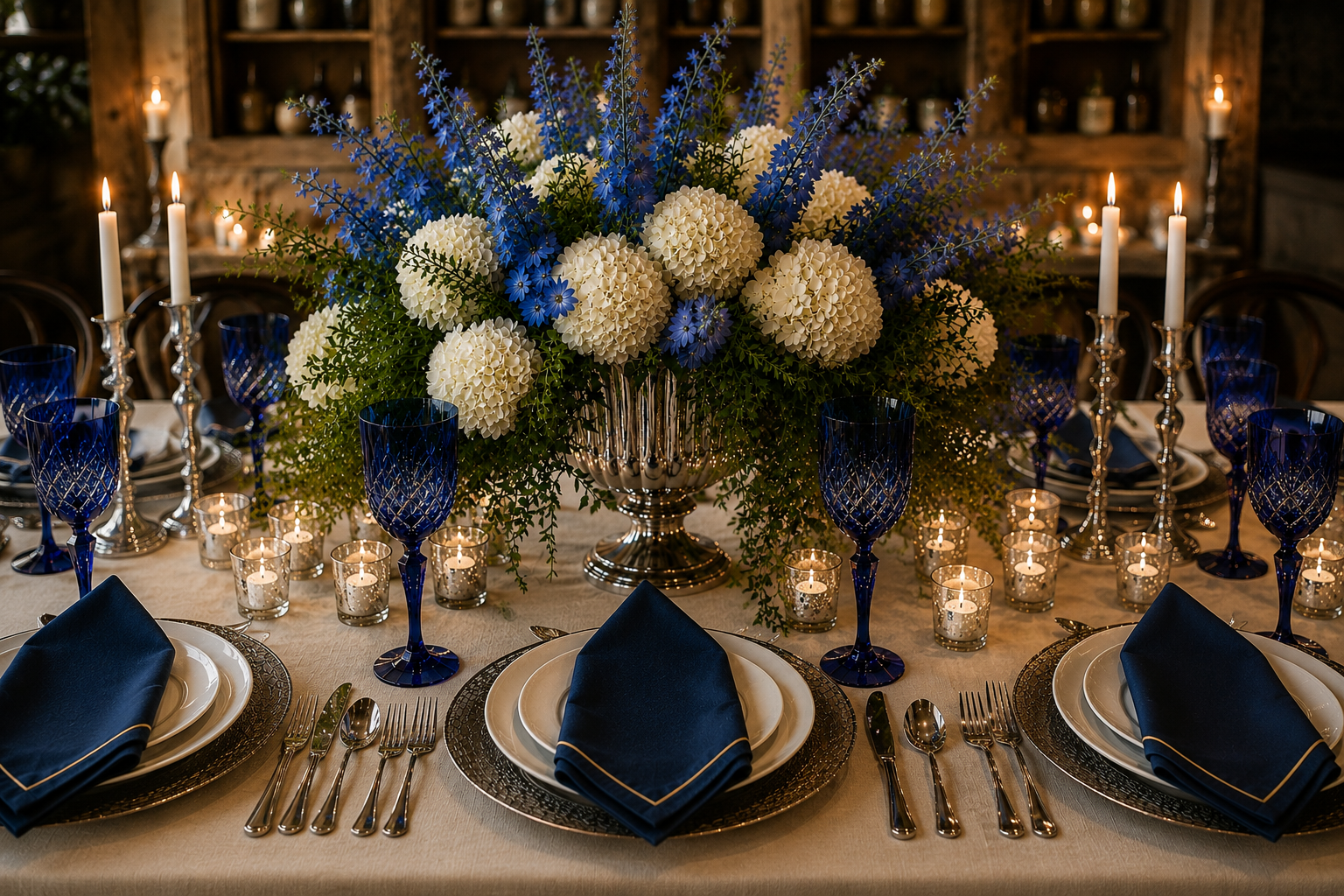
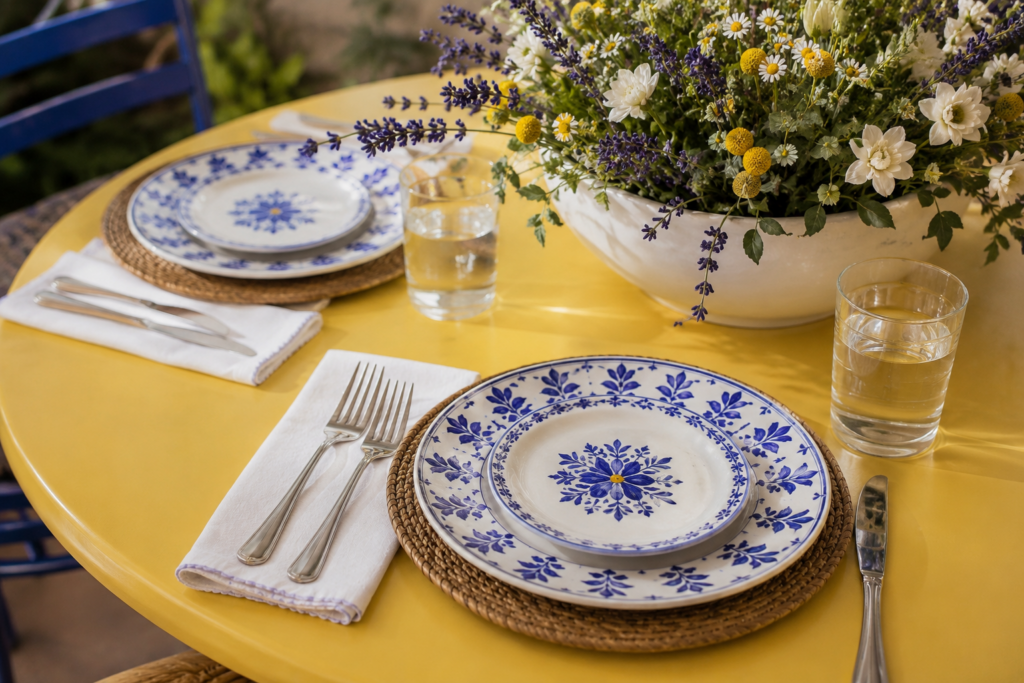
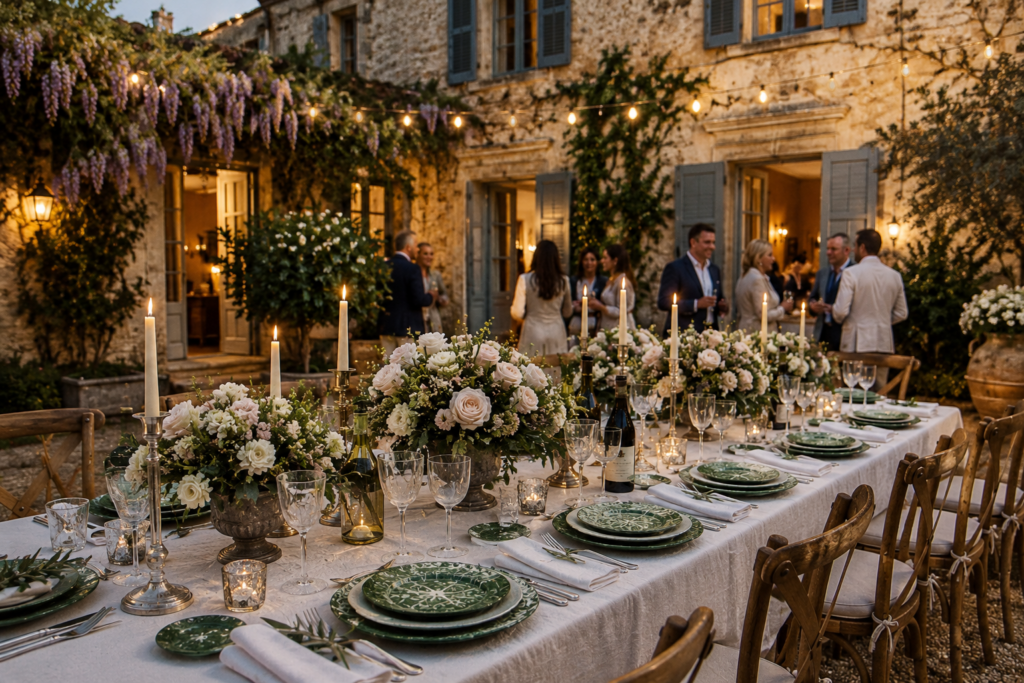
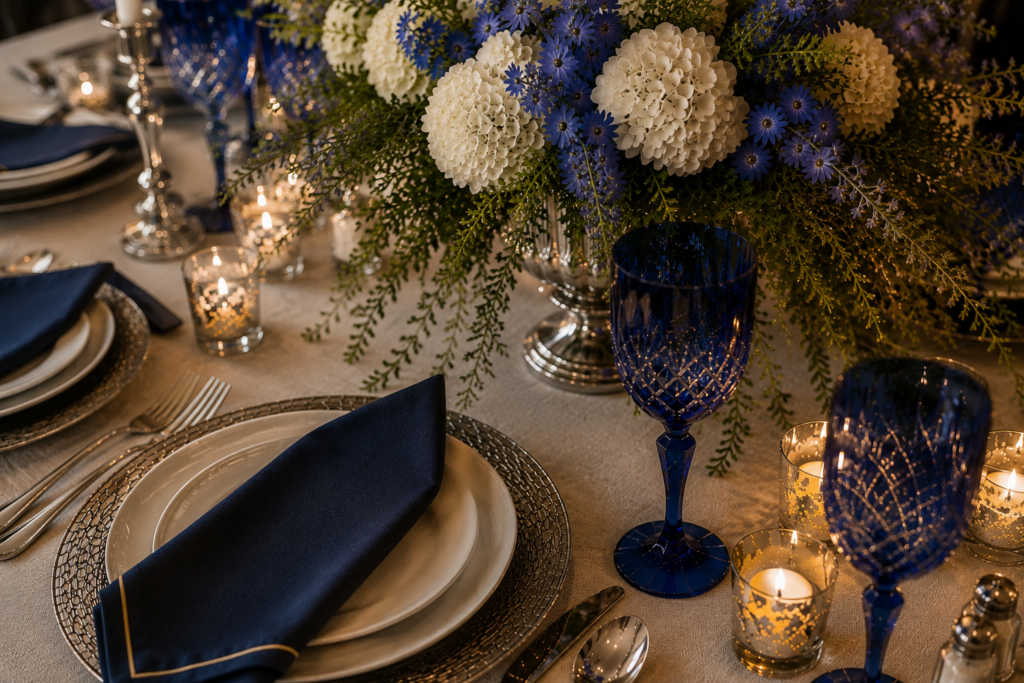
A beautifully set table does more than simply tell your guests where to sit.
It creates anticipation before the first course is served, encourages meaningful conversation, and quietly tells every guest they were expected. Whether you’re hosting Thanksgiving dinner, an intimate dinner party, a birthday celebration, or simply gathering your family around the table on a Sunday evening, thoughtful table settings help transform an ordinary meal into a memorable experience.
The wonderful thing about table etiquette is that it isn’t nearly as complicated as many people believe.
Every Beautiful Table Begins With the Basics
Once you understand a few timeless principles, you’ll never again wonder where the fork belongs, which glass to use, or which utensil comes first. Better yet, you’ll feel confident setting everything from a casual family dinner to a beautifully elegant holiday table.
Many people assume formal table settings require memorizing dozens of complicated rules.
Fortunately, they don’t.
Every beautiful place setting begins with the same simple foundation.
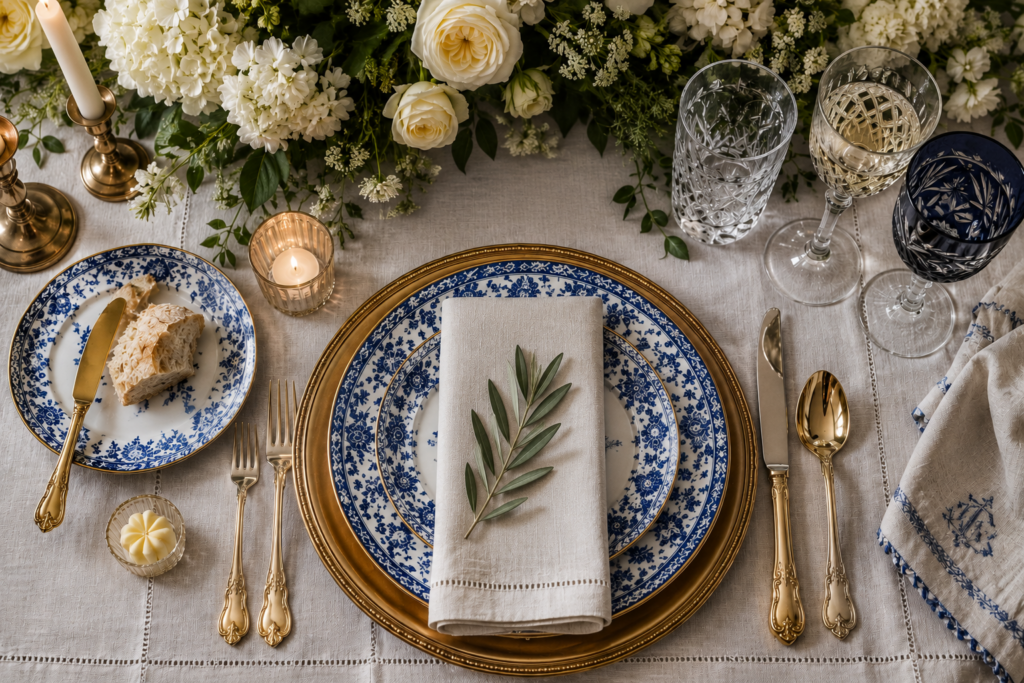
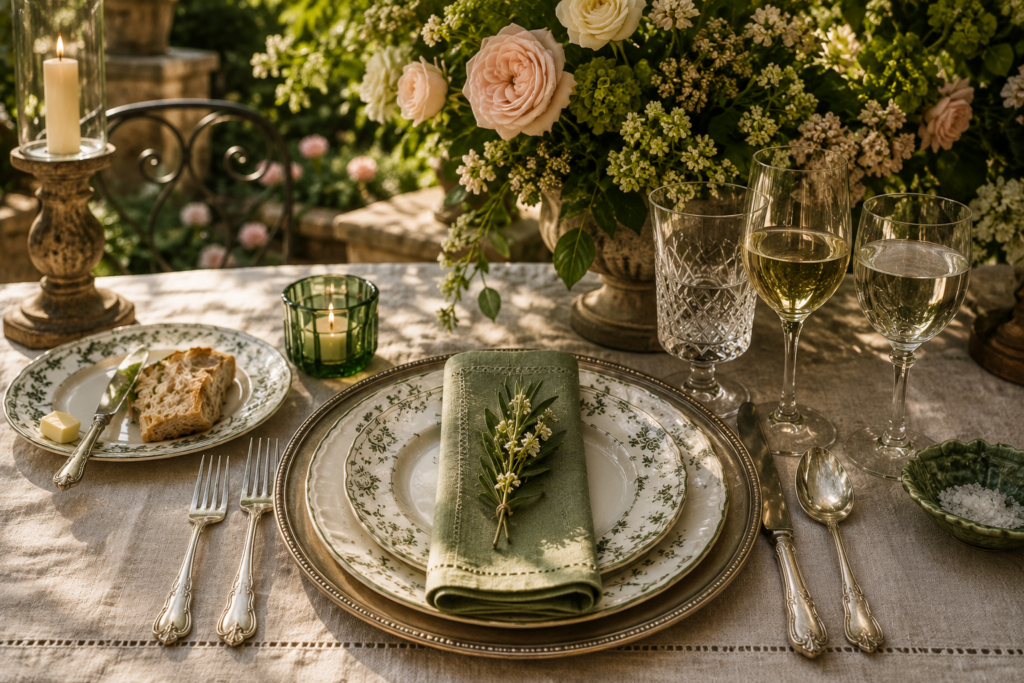
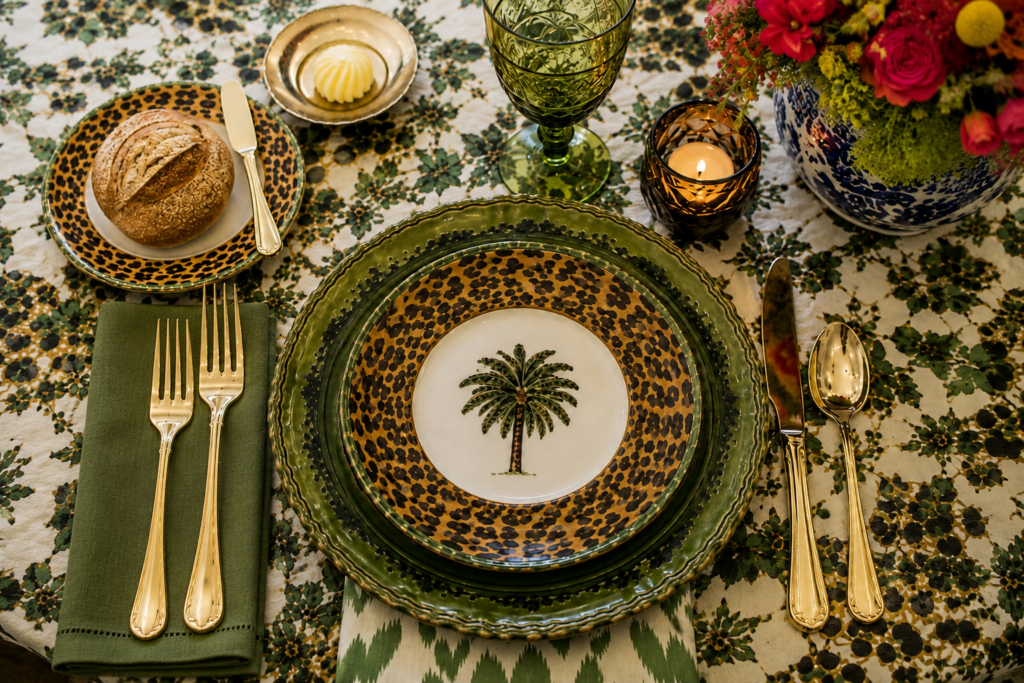
The dinner plate sits in the center.
Forks are placed on the left.
Knives and spoons are placed on the right.
Glasses are placed above the knife.
Bread plates sit above the forks.
Whether you’re serving a simple weeknight dinner or a five-course holiday meal, these basic guidelines remain remarkably consistent.
Once you understand the foundation, building a beautiful table becomes surprisingly easy.
✨Caroline’s Tip
The most memorable tables aren’t necessarily the most expensive.
Fresh flowers, candlelight, beautiful linens, and thoughtful details will always make a stronger impression than simply adding more dishes or silverware.
Over the years, I’ve shared one simple memory trick with countless friends, and nearly every one of them tells me they still use it today.
I call it the 5/4 Rule.
The 5/4 Rule
Fork has four letters.
Left has four letters.
Knife has five letters.
Spoon has five letters.
Right has five letters.
That’s it.
Forks belong on the four-letter side.
Knives and spoons belong on the five-letter side.
It’s one of those wonderfully simple tricks that removes all the guesswork. Once you’ve learned it, you’ll never second-guess yourself again.
Use Your Utensils From the Outside In
Have you ever been seated at a beautifully set formal table and wondered why there were so many forks and spoons?
Don’t worry.
There’s an easy rule for that too.
Always work from the outside in.
The utensils placed farthest from your dinner plate are used first. As each course is served, you simply work your way inward toward the plate.
If salad is served before dinner, the salad fork sits on the outside of the dinner fork.
If soup is served first, the soup spoon sits on the outside of the knife.
Instead of memorizing every possible place setting, simply remember this one rule and you’ll feel comfortable at virtually any dinner table.
✨Caroline’s Tip
If you’re entertaining at home, don’t feel obligated to use every piece of silverware you own.
A beautifully edited table almost always feels more elegant than one that’s overcrowded with pieces your guests will never use.
The Knife Always Faces the Plate
One of the smallest details often makes the biggest difference.
When setting the table, the blade of the knife should always face inward toward the dinner plate.
Although most people never notice this consciously, it gives a table a polished and intentional appearance. It’s a simple tradition that has remained part of proper table etiquette for generations.
Likewise, spoons are placed to the right of the knife whenever soup or dessert requires one.
Remember your 5/4 Rule and you’ll never have to wonder which side they belong on.
Bread on the Left. Drinks on the Right.
Here’s another easy trick that can save you from an awkward moment at a dinner party.
Bread always belongs on the left.
Drinks always belong on the right.
Many people remember this by making a lowercase “b” with their left hand and a lowercase “d” with their right hand.
Your left hand forms the “b” for bread.
Your right hand forms the “d” for drink.
It sounds almost too simple, but it’s a memory trick that’s surprisingly effective and one you’ll likely remember for years.
✨Caroline’s Tip
Simple memory tricks are often more valuable than trying to memorize dozens of etiquette rules. The goal isn’t perfection—it’s confidence.
Setting the Right Glasses
For most dinners, one water glass is all you’ll need.
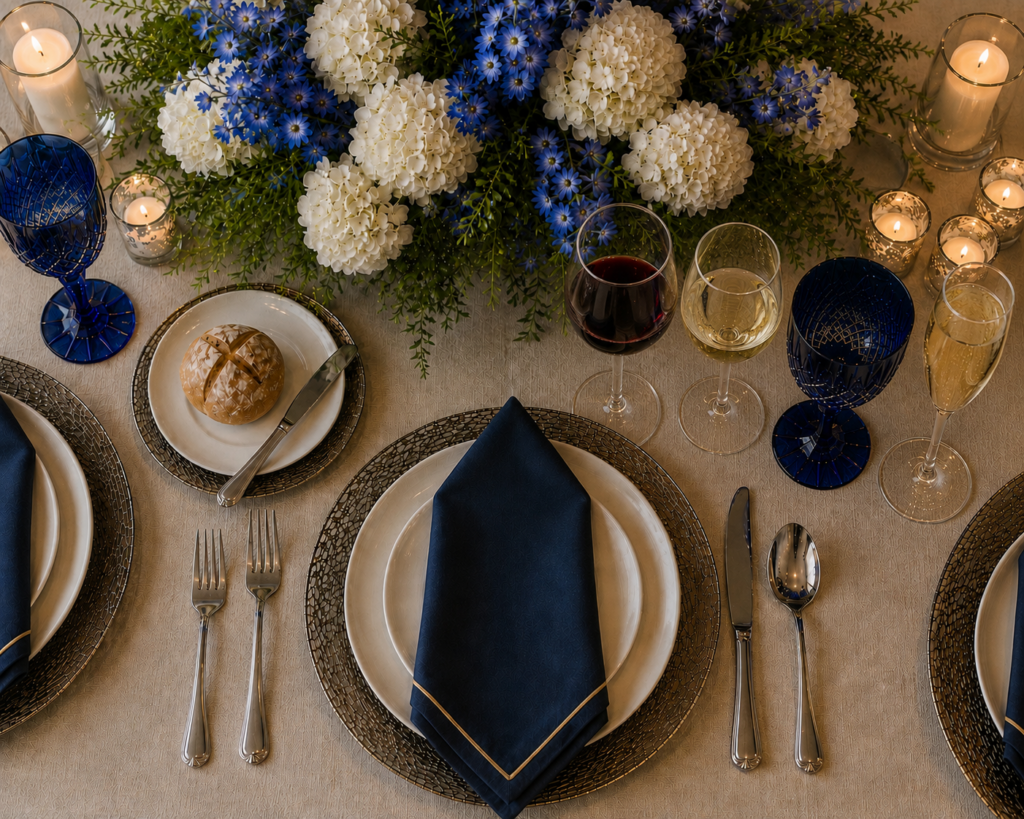
When serving wine, glasses are arranged just above the knife.
The water glass sits closest to the dinner plate.
White wine is typically placed slightly behind and to the right.
Red wine sits beside or slightly above the white wine glass.
Champagne flutes are added only when appropriate for the occasion.
For everyday entertaining, don’t feel pressured to include every possible piece of stemware. Beautiful entertaining is often about thoughtful simplicity rather than excess.
Napkin Placement
One of the questions I hear most often is where the napkin belongs.
Fortunately, there are several correct answers.
A napkin may be placed:
• On the dinner plate
• To the left of the forks
• Folded beneath the forks
• Inside a napkin ring
Each option is perfectly acceptable depending on the style of entertaining you’re creating.
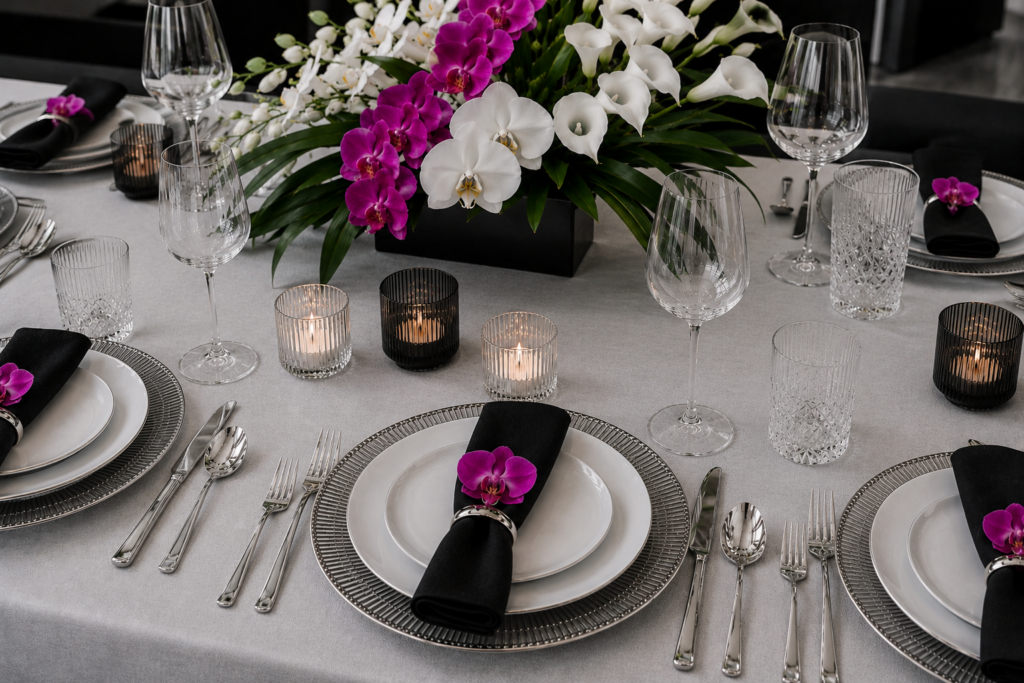
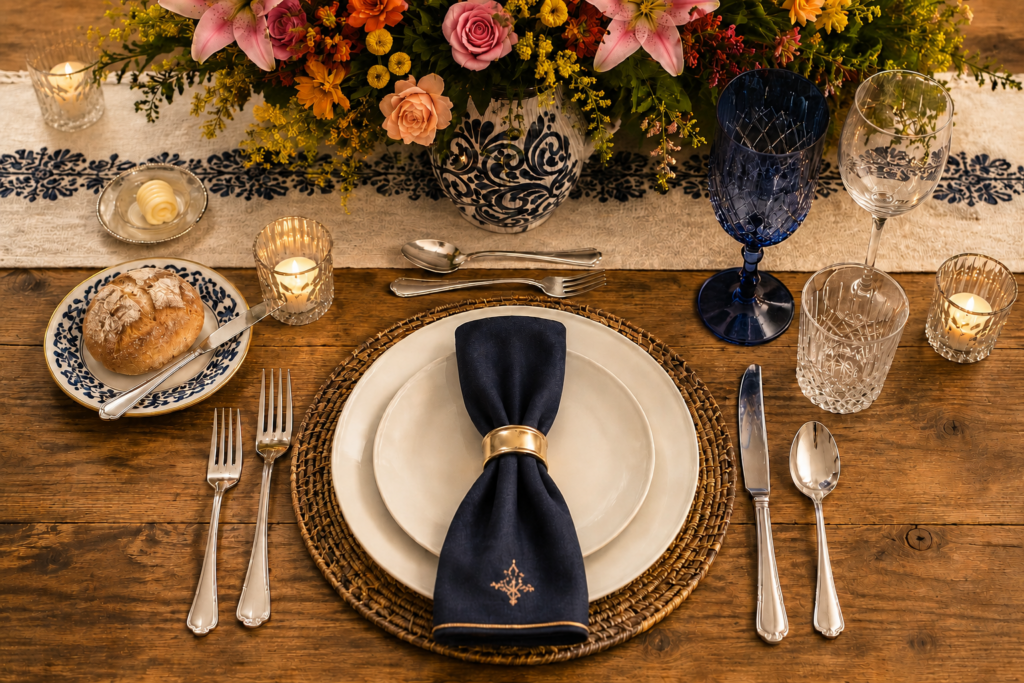
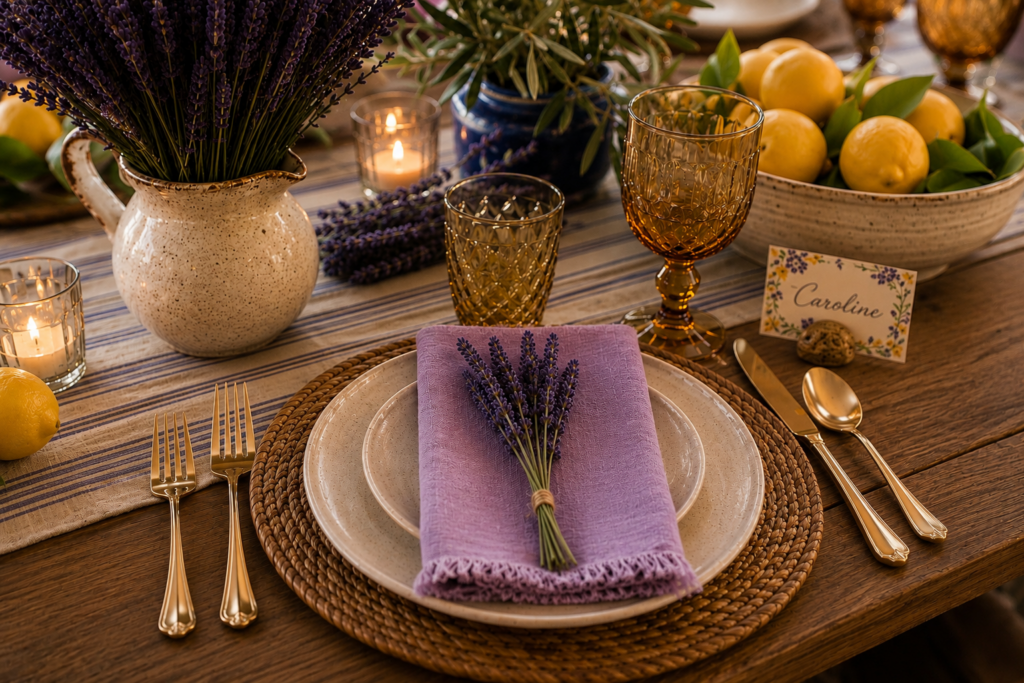
Personally, I love placing a linen napkin on the dinner plate with a beautiful napkin ring, a sprig of rosemary, or a personalized place card. It’s elegant without feeling overly formal.
✨Caroline’s Tip
Linen napkins instantly elevate almost any table. Even the simplest dinner feels more thoughtful when cloth napkins replace paper ones.
Formal vs. Casual Place Settings
Many people believe formal entertaining requires dozens of dishes and utensils.
It really doesn’t.
The only difference is that a formal table includes additional pieces for each course being served.
The same basic rules still apply.
Forks remain on the left.
Knives and spoons remain on the right.
Utensils are arranged in the order they will be used.
Glasses remain above the knife.
Bread plates remain above the forks.
Once you understand the basic layout, a formal table simply becomes an expanded version of the everyday place setting.
Common Table Setting Mistakes
Even experienced hosts occasionally make simple mistakes.
Some of the most common include:
Using too many utensils.
Placing the knife with the blade facing away from the plate.
Overcrowding the table with decorations.
Centerpieces that block conversation.
Using glassware that doesn’t match the meal.
Trying too hard to create a “perfect” table.
Remember, beautiful entertaining isn’t about impressing your guests.
It’s about making them feel comfortable enough to relax and enjoy your company.
Final Thoughts
Beautiful Entertaining Is About Making People Feel Welcome
The purpose of table etiquette has never been to impress people.
Its purpose is to remove distractions so everyone can focus on what matters most—sharing a wonderful meal and enjoying each other’s company.
A thoughtfully set table tells your guests they were worth the effort.
It creates an atmosphere that encourages people to slow down, linger a little longer, and enjoy the experience you’ve created.
Whether you’re serving takeout on a Tuesday evening or hosting Thanksgiving for thirty guests, beautiful entertaining begins with thoughtfulness, not perfection.
✨Caroline’s Tip
Some of the most memorable dinner parties I’ve attended weren’t the most elaborate.
They were the ones where conversation flowed easily, laughter filled the room, and everyone felt completely at home.
Never underestimate the power of candlelight, fresh flowers, and genuine hospitality.
Small Details Make the Biggest Impression
Luxury is rarely about owning the most expensive things.
Instead, it comes from thoughtful details.
Fresh flowers gathered from the garden.
Beautiful linen napkins.
Candles flickering during dinner.
A handwritten place card.
Pretty glassware.
A favorite serving platter that’s been in the family for years.
These little touches create warmth and personality that guests remember long after the meal has ended.
The most beautiful homes are not always the largest or the most expensive.
They’re the homes where people feel welcomed.
Final Thoughts
Table etiquette isn’t about following rigid rules.
It’s about creating a welcoming environment where family and friends can relax, enjoy one another’s company, and make lasting memories.
Once you remember the 5/4 Rule, work from the outside in, and keep bread on the left and drinks on the right, you’ve already mastered the fundamentals.
Everything else is simply adding your own personal style.
Whether your table is dressed with heirloom china, everyday dishes, or a simple bouquet of flowers from your garden, the goal remains exactly the same.
Create a table that invites people to gather.
Create a table that encourages conversation.
Most importantly, create a table people won’t want to leave.
Memories of Style
“Some of life’s sweetest memories begin around a beautifully set table. It isn’t the china, the crystal, or the silverware people remember most. It’s the laughter, the conversations, and the feeling of being welcomed.”