Sometimes the most treasured pieces in our homes aren’t the newest—they’re the ones filled with memories.
Do you have a beautiful antique piece of furniture that belonged to your grandmother, great-grandmother, or another family member you loved?
Maybe you’ve moved into a more modern home. Perhaps your decorating style has changed over the years, or you’ve simply run out of walls to display another large piece of furniture. You know you can’t bear to part with it, but it doesn’t seem to have a place anymore.
Before you move it to the garage or donate it, consider giving it an entirely new purpose.
Many antique pieces were handcrafted from solid wood and built to last for generations. With a little creativity—and sometimes the help of a local carpenter—they can become some of the most beautiful and unique pieces in your home.
Instead of seeing an old piece of furniture that no longer fits your décor, try seeing the possibilities.
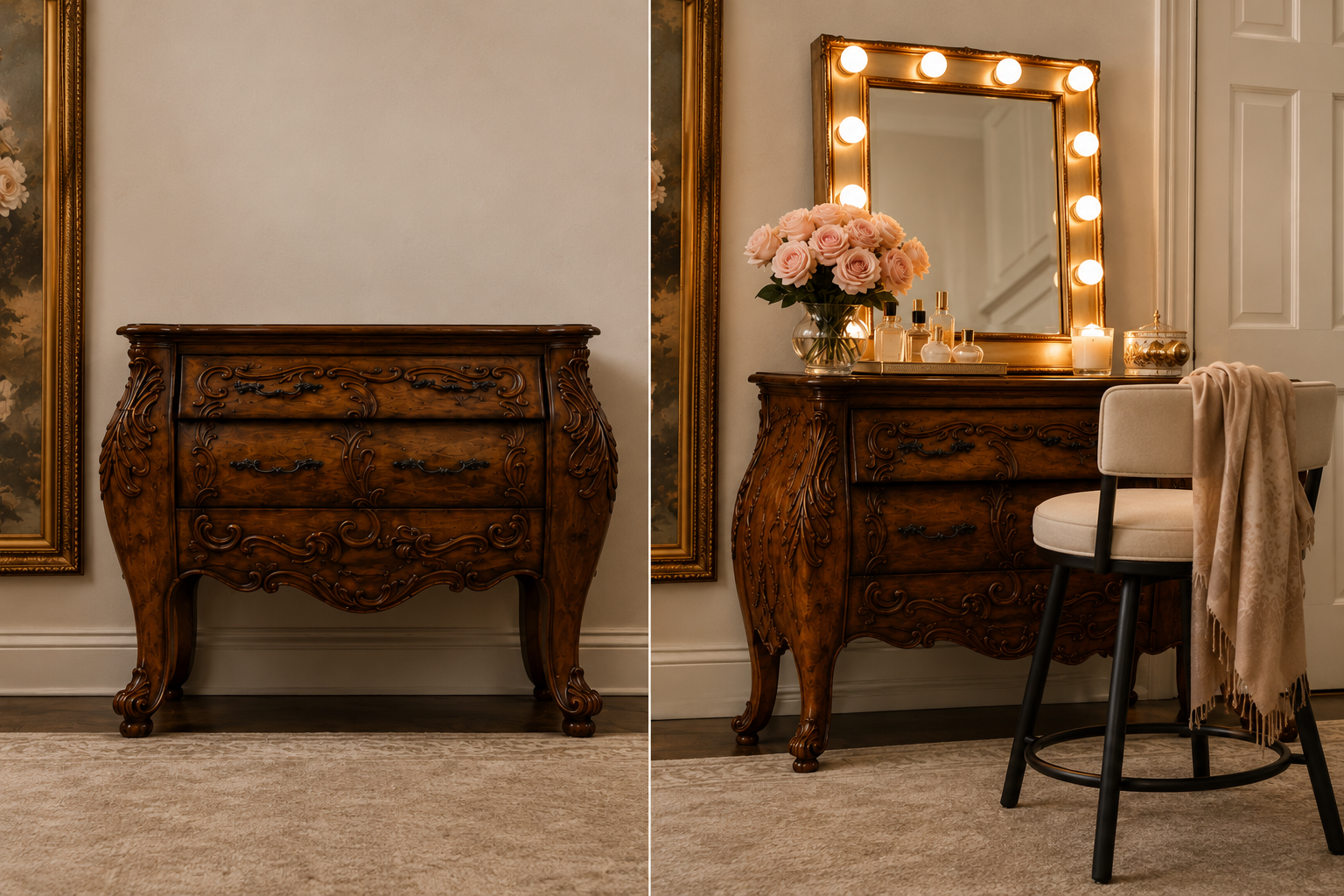
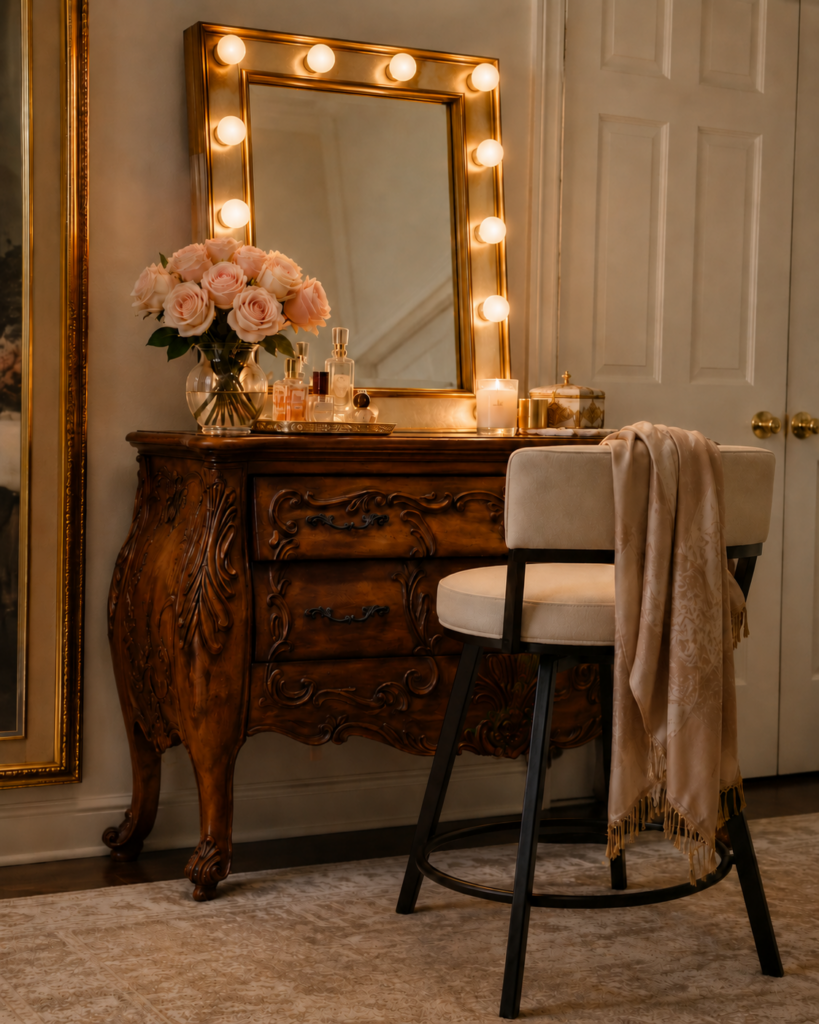
1. Create a Stunning Bathroom Vanity
This is one of my favorite transformations. This is from my bathroom.
A beautiful antique chest instantly creates a custom luxury vanity that feels warm, elegant, and completely one-of-a-kind. The rich wood tones add character that builder-grade cabinetry simply can’t replicate.
Every morning, you’ll begin your day with something that reminds you of family history while enjoying a bathroom that looks professionally designed.
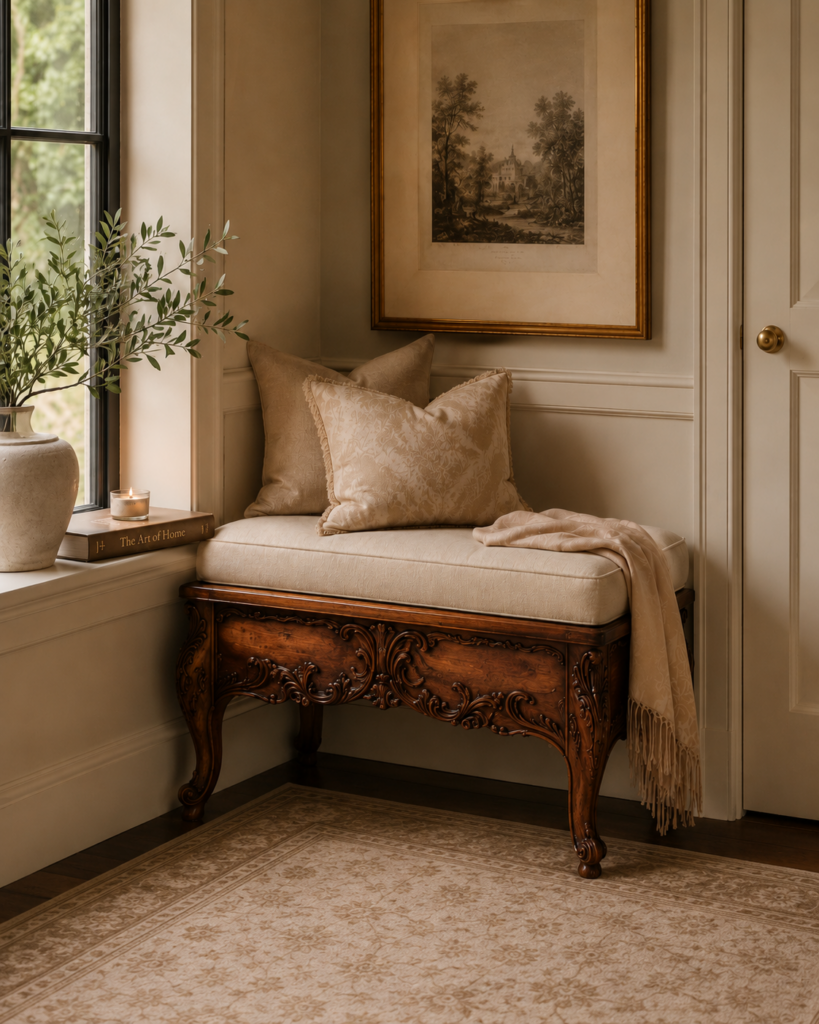
2. Turn It Into a Charming Entryway or Bedroom Bench
With a custom upholstered cushion, an antique chest can become a welcoming bench for an entryway, mudroom, or bedroom.
It’s both beautiful and practical—a comfortable place to sit while putting on shoes, setting down packages, or simply adding warmth to an otherwise empty space.
Sometimes the simplest transformation becomes the one you enjoy the most. It may take a carpenter to make this renovation, or you can hop on YouTube and find out how to create it yourself.
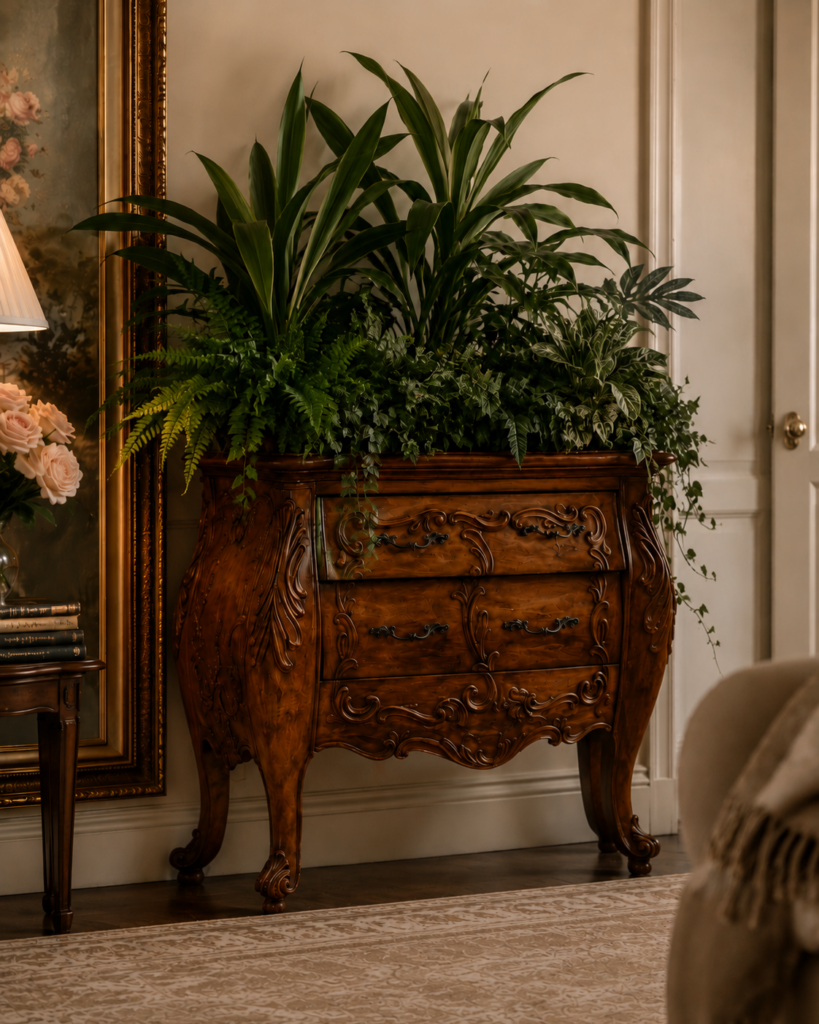
3. Bring The Outdoors In As A Planter
Not every heirloom has to stay intact.
With a few thoughtful modifications, an antique piece can become an eye-catching planter overflowing with seasonal flowers, herbs, or cascading greenery.
Placed on a covered porch, patio, or garden courtyard, it instantly becomes a conversation piece that no one else will have.
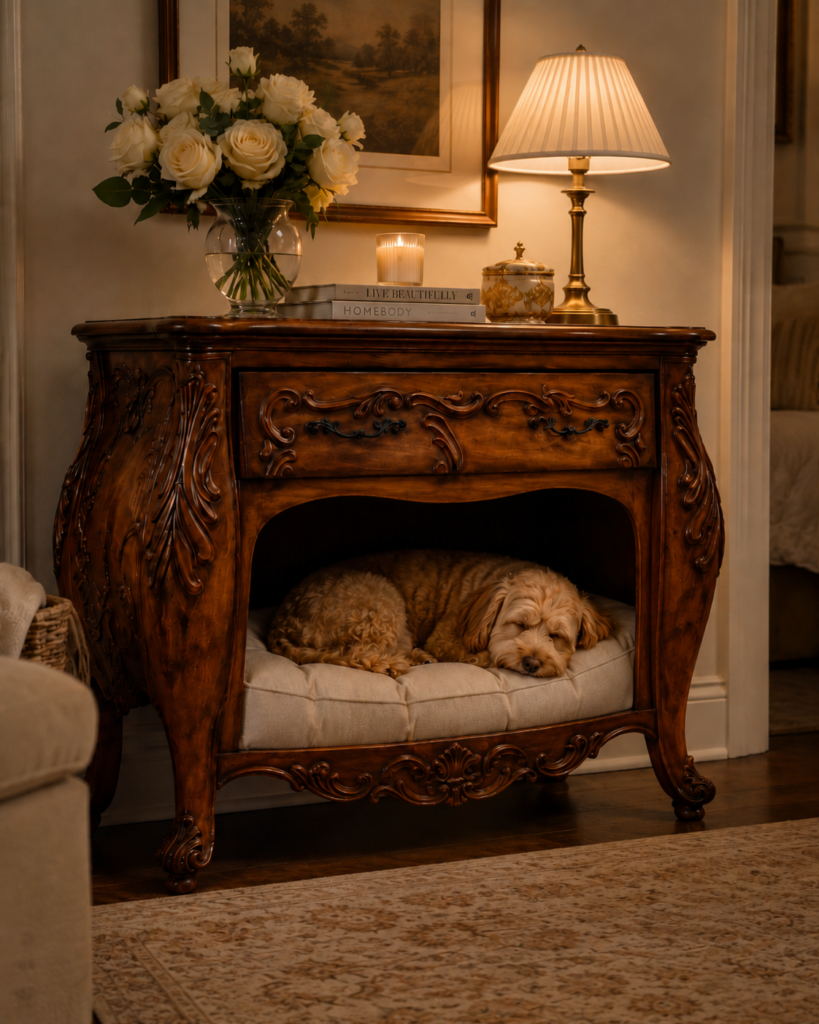
4. Give Your Best Friend a Luxury Bed
Our pets are family too.
Removing drawers or modifying the lower portion of an antique cabinet creates the perfect space for a plush pet bed.
Instead of another fabric dog bed sitting in the corner, your furry family member enjoys a cozy retreat that’s as beautiful as the rest of your home.
It’s a creative way to honor the past while making room for today’s family memories.
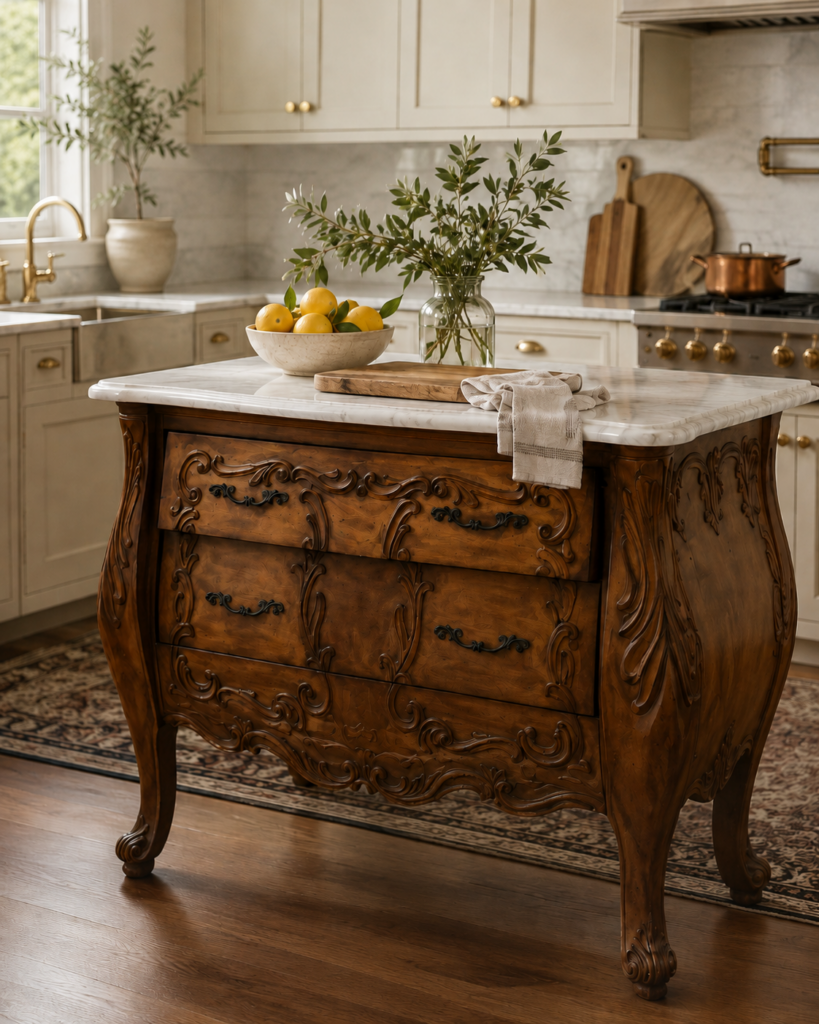
5. Create a One-of-a-Kind Kitchen Island
This transformation completely changes how the piece is used.
Adding a beautiful marble countertop allows an antique cabinet to become a functional kitchen island with incredible character.
Not only does it provide additional workspace and storage, but it also becomes the centerpiece of the kitchen—a room where families naturally gather.
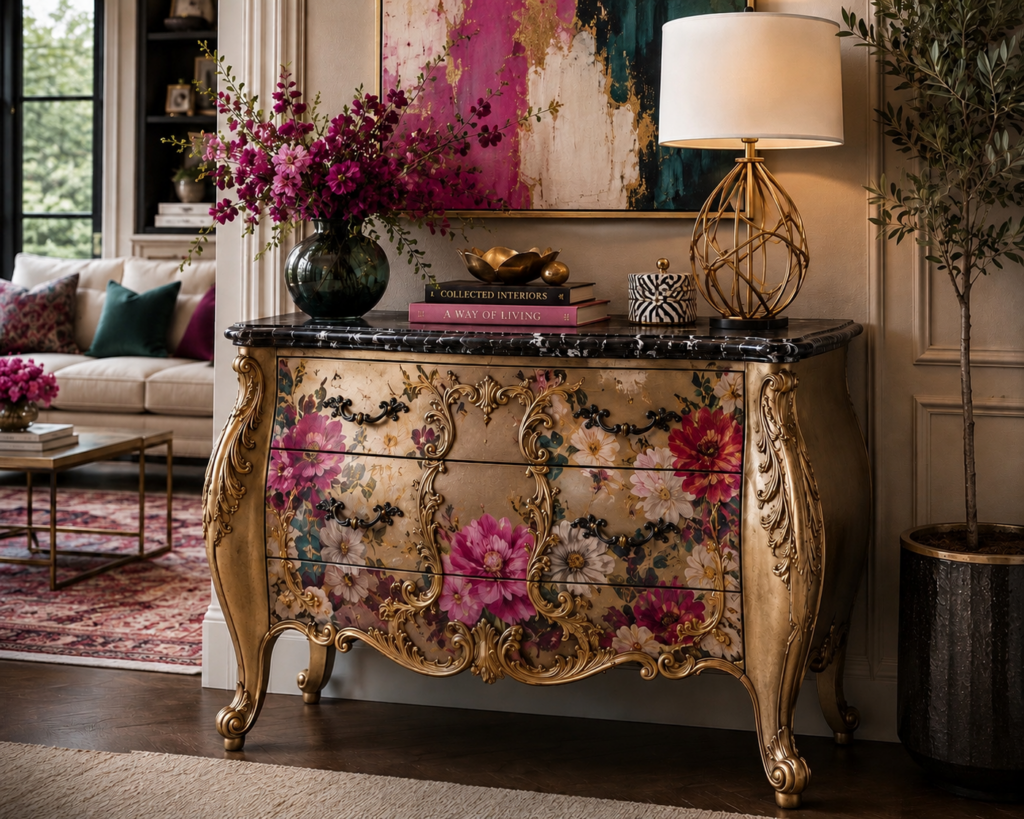
Option 4: Give It a Bold New Personality with Decoupage
Sometimes an heirloom doesn’t need to disappear—it simply needs a fresh perspective. Decoupage is one of my favorite ways to transform an antique chest into a true statement piece while preserving its beautiful curves and craftsmanship. Whether you choose sophisticated florals, dramatic botanicals, chinoiserie, vintage maps, or abstract artwork, the possibilities are almost endless.
The key is balancing old and new. Pairing an ornate antique silhouette with modern artwork creates a one-of-a-kind piece that looks custom-designed instead of outdated. Finished with a durable protective topcoat, a decoupaged chest becomes a conversation piece that adds personality, color, and artistic flair to any room.
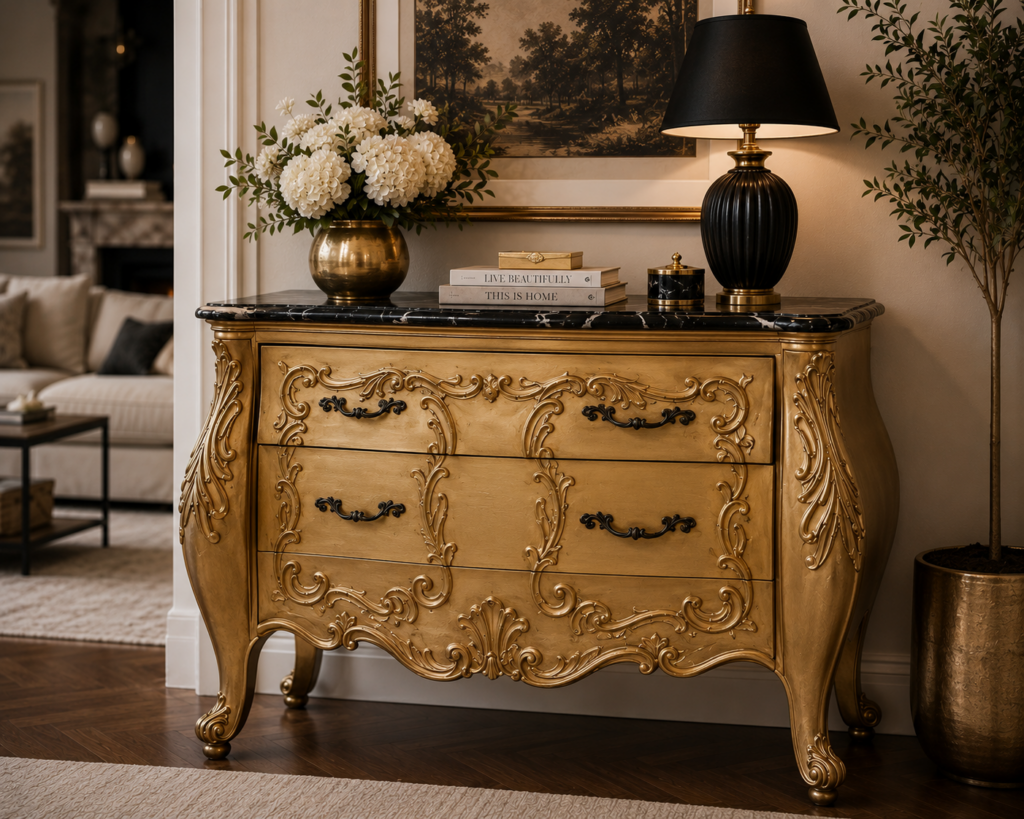
Option 5: Modern Luxury with Paint & Marble
If your decorating style leans more modern, don’t overlook the power of paint. A rich black, soft ivory, deep navy, or elegant gold can completely transform an antique Bombé chest while highlighting every carved detail that makes it special.
For an even more luxurious look, replace the wood top with black-and-white marble. Combined with updated designer hardware, the result is a sophisticated piece that feels custom-made for today’s interiors while still honoring its history.
It’s proof that an heirloom doesn’t have to match its original era to remain beautiful. With a few thoughtful updates, it can become one of the most striking pieces in your home—and one you’ll enjoy for years to come.
Pieces like these tell a story that brand-new furniture simply can’t.
A Few More Ideas
Once you start looking at antique furniture differently, the possibilities become almost endless.
If you’re fortunate enough to have a skilled carpenter nearby, many projects require only minor structural modifications while preserving the original beauty of the furniture.
You might also consider:
Updating the hardware with elegant brass or polished nickel pulls.
Adding a marble, quartz, or butcher-block top.
Installing soft-close drawers.
Adding hidden storage compartments.
Refinishing the wood while preserving its beautiful patina.
Using decorative decoupage inside drawers, on shelving, or behind glass cabinet doors for an unexpected designer touch.
The goal isn’t to erase the history of the piece—it’s to give it another chapter.
Why I Love Projects Like These
Decorating isn’t just about buying new furniture.
Some of the most meaningful homes are filled with pieces that tell a story.
Every scratch, every drawer pull, and every carved detail represents another generation that loved the same piece before you did.
Rather than asking yourself,
“Where can I put Grandma’s furniture?”
try asking,
“How can I make it part of my family’s story for another generation?”
Sometimes the answer isn’t finding another empty wall.
Sometimes it’s discovering an entirely new purpose.
A Thought from Caroline
The most beautiful homes aren’t filled with the most expensive furniture—they’re filled with pieces that mean something. If we can preserve family memories while creating something both beautiful and useful, we’ve created more than great design. We’ve created another generation of stories.
— Caroline
Have you transformed a family heirloom into something new?
I’d love to hear your story. Share your favorite antique makeover ideas in the comments—you never know who you might inspire to give a treasured family piece a beautiful second life.
Things of Style
Thoughtfully Collected. Beautifully Lived. Do Everything With Style!
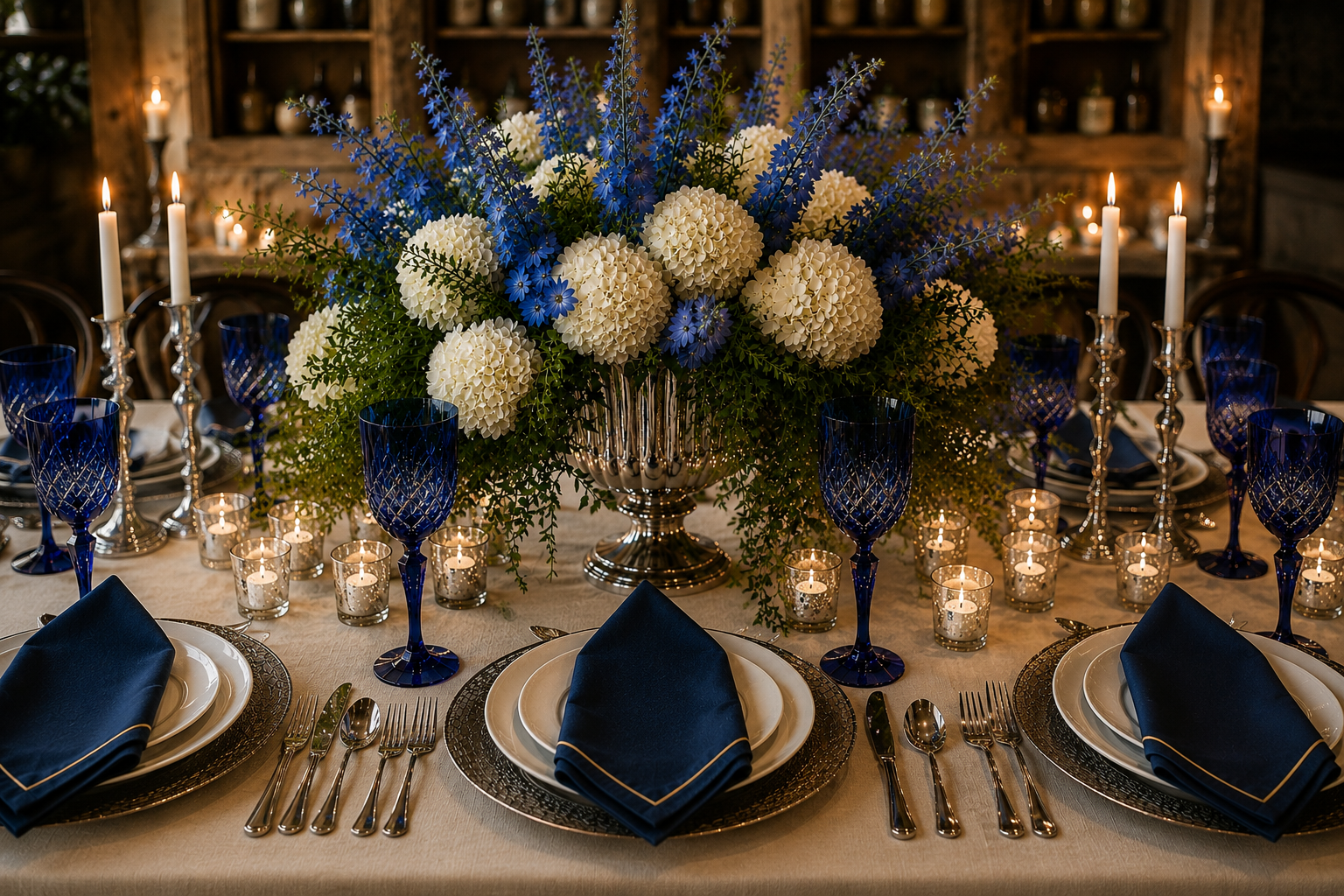
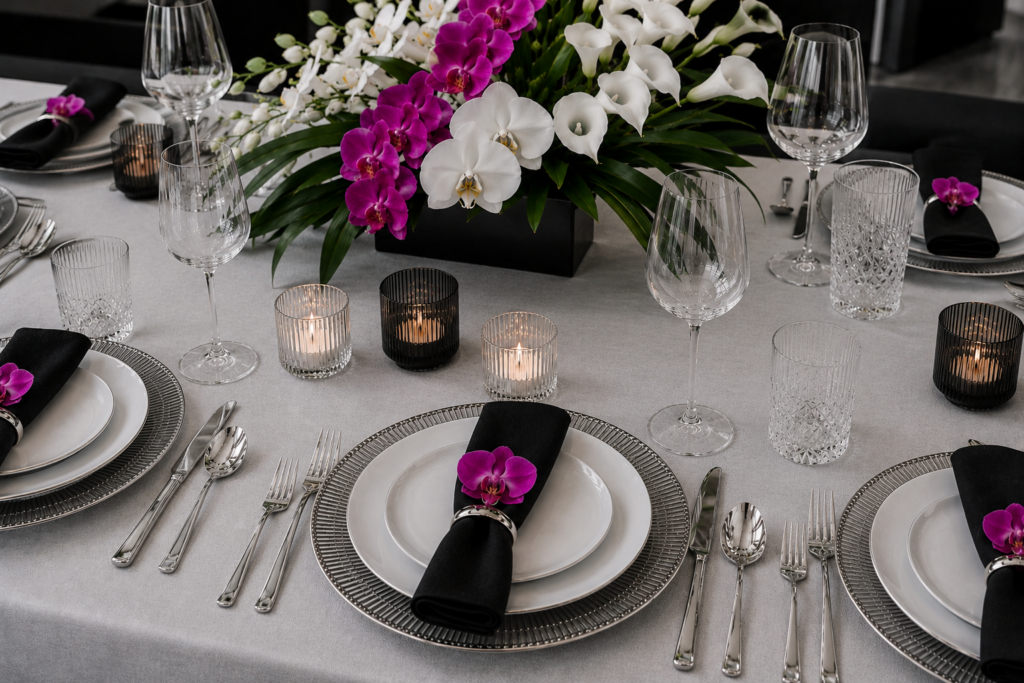
A beautifully set table does more than simply tell your guests where to sit.
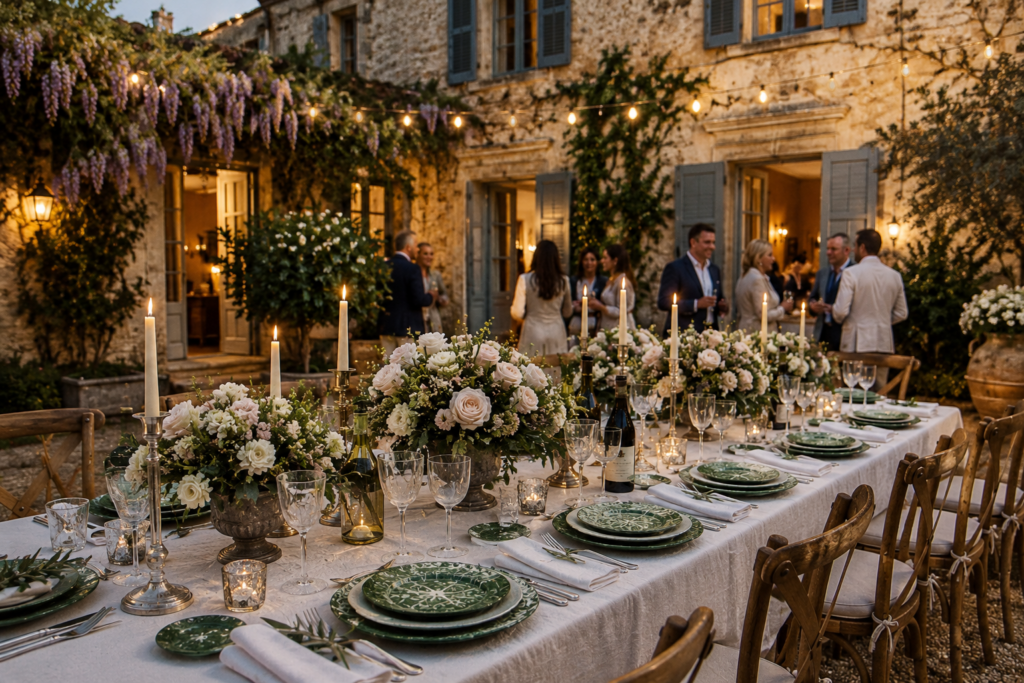
It creates anticipation before the first course is served, encourages meaningful conversation, and quietly tells every guest they were expected. Whether you’re hosting Thanksgiving dinner, an intimate dinner party, a birthday celebration, or simply gathering your family around the table on a Sunday evening, thoughtful table settings help transform an ordinary meal into a memorable experience.
The wonderful thing about table etiquette is that it isn’t nearly as complicated as many people believe.
Every Beautiful Table Begins With the Basics
Once you understand a few timeless principles, you’ll never again wonder where the fork belongs, which glass to use, or which utensil comes first. Better yet, you’ll feel confident setting everything from a casual family dinner to a beautifully elegant holiday table.
Many people assume formal table settings require memorizing dozens of complicated rules.
Fortunately, they don’t.
Every beautiful place setting begins with the same simple foundation.
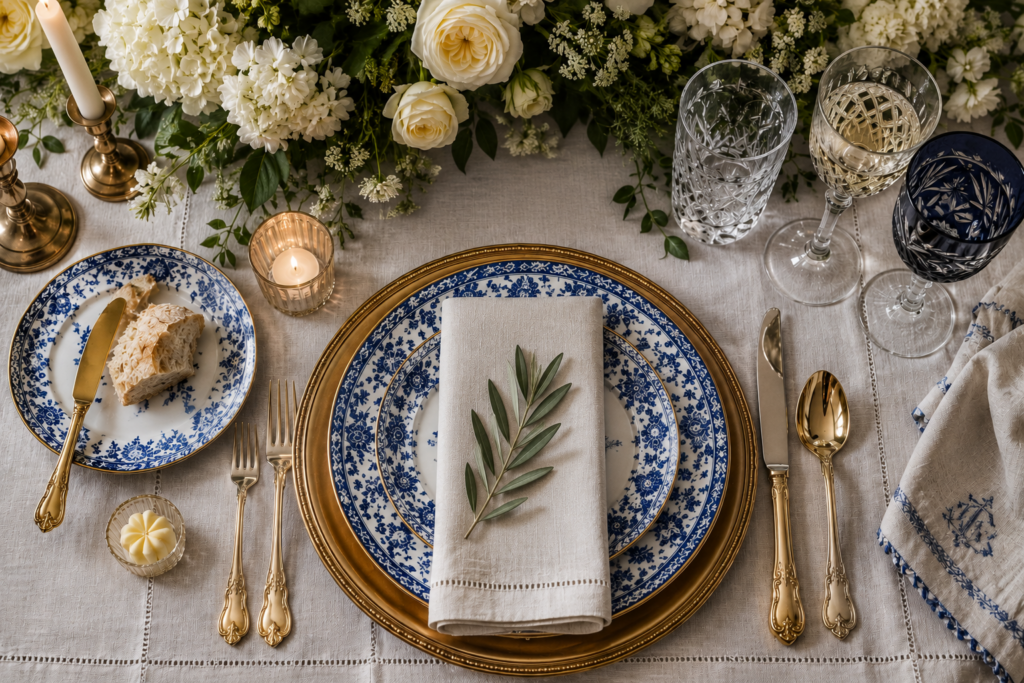
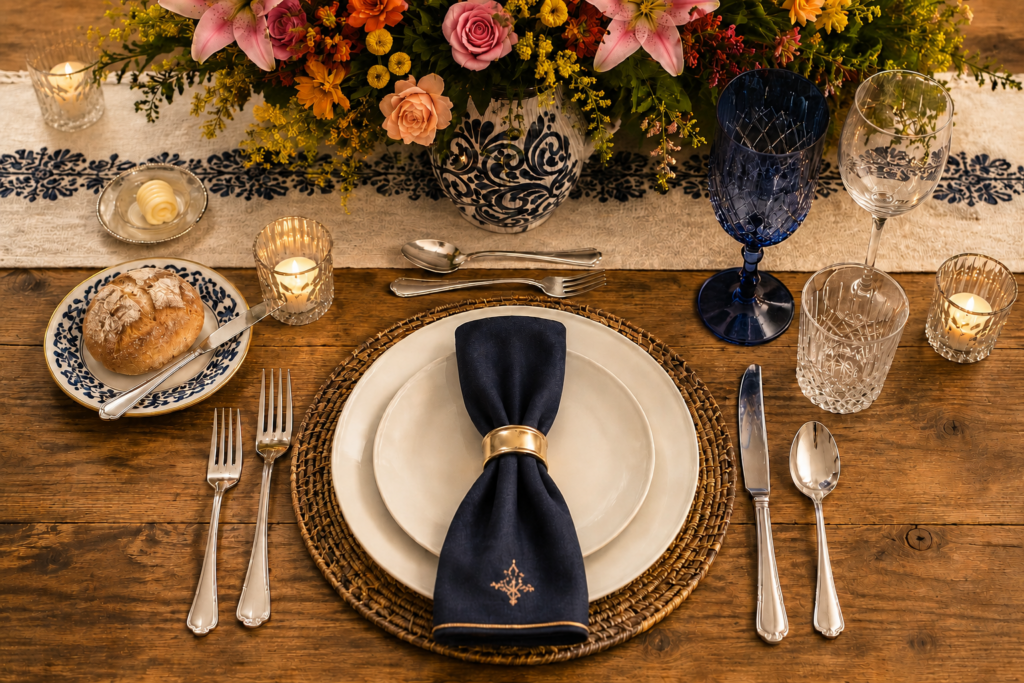
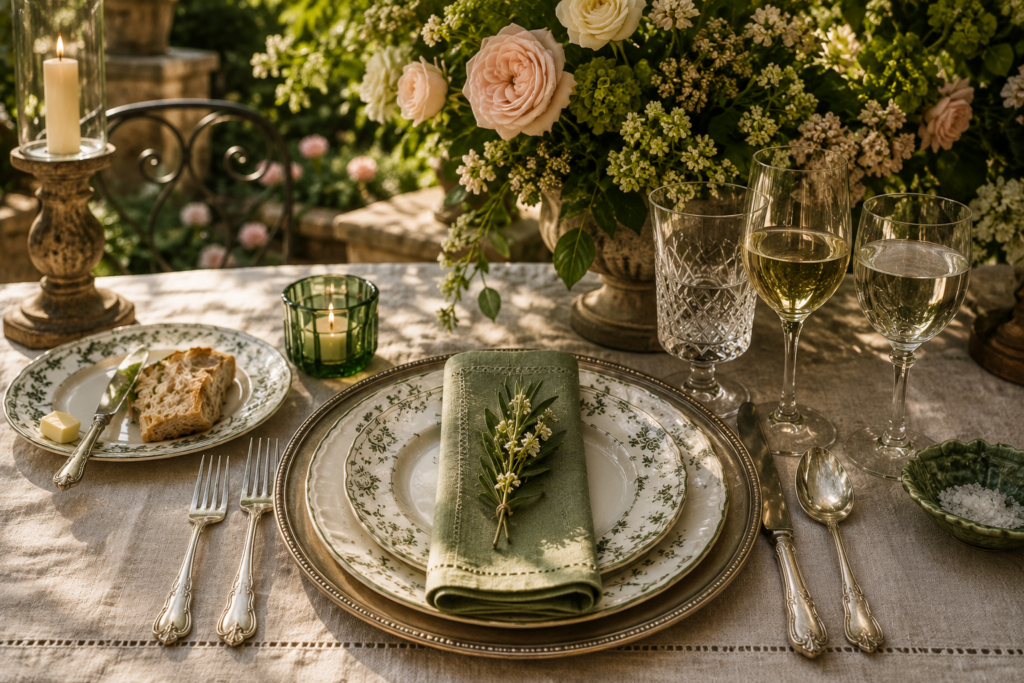
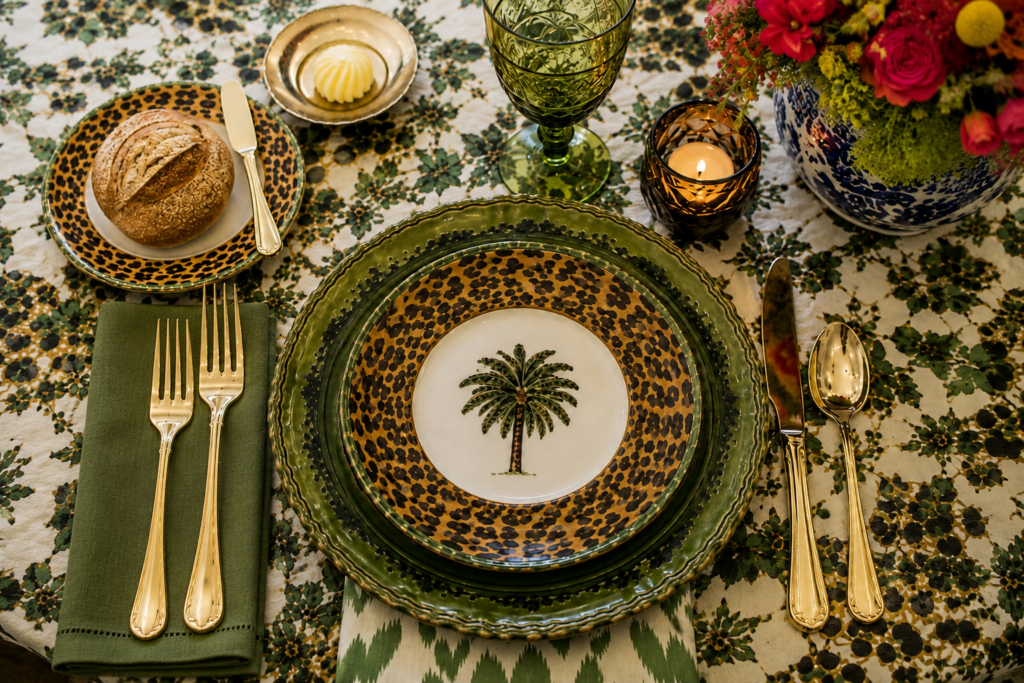
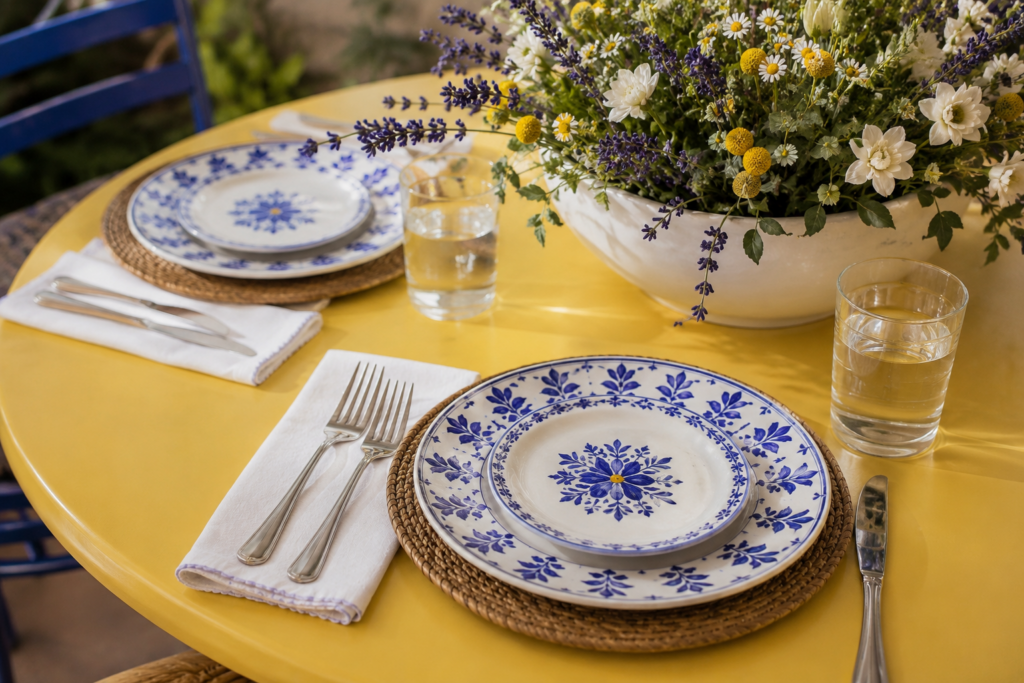
The dinner plate sits in the center.
Forks are placed on the left.
Knives and spoons are placed on the right.
Glasses are placed above the knife.
Bread plates sit above the forks.
Whether you’re serving a simple weeknight dinner or a five-course holiday meal, these basic guidelines remain remarkably consistent.
Once you understand the foundation, building a beautiful table becomes surprisingly easy.
✨Caroline’s Tip
The most memorable tables aren’t necessarily the most expensive.
Fresh flowers, candlelight, beautiful linens, and thoughtful details will always make a stronger impression than simply adding more dishes or silverware.
Over the years, I’ve shared one simple memory trick with countless friends, and nearly every one of them tells me they still use it today.
I call it the 5/4 Rule.
The 5/4 Rule
Fork has four letters.
Left has four letters.
Knife has five letters.
Spoon has five letters.
Right has five letters.
That’s it.
Forks belong on the four-letter side.
Knives and spoons belong on the five-letter side.
It’s one of those wonderfully simple tricks that removes all the guesswork. Once you’ve learned it, you’ll never second-guess yourself again.
Use Your Utensils From the Outside In
Have you ever been seated at a beautifully set formal table and wondered why there were so many forks and spoons?
Don’t worry.
There’s an easy rule for that too.
Always work from the outside in.
The utensils placed farthest from your dinner plate are used first. As each course is served, you simply work your way inward toward the plate.
If salad is served before dinner, the salad fork sits on the outside of the dinner fork.
If soup is served first, the soup spoon sits on the outside of the knife.
Instead of memorizing every possible place setting, simply remember this one rule and you’ll feel comfortable at virtually any dinner table.
✨Caroline’s Tip
If you’re entertaining at home, don’t feel obligated to use every piece of silverware you own.
A beautifully edited table almost always feels more elegant than one that’s overcrowded with pieces your guests will never use.
The Knife Always Faces the Plate
One of the smallest details often makes the biggest difference.
When setting the table, the blade of the knife should always face inward toward the dinner plate.
Although most people never notice this consciously, it gives a table a polished and intentional appearance. It’s a simple tradition that has remained part of proper table etiquette for generations.
Likewise, spoons are placed to the right of the knife whenever soup or dessert requires one.
Remember your 5/4 Rule and you’ll never have to wonder which side they belong on.
Bread on the Left. Drinks on the Right.
Here’s another easy trick that can save you from an awkward moment at a dinner party.
Bread always belongs on the left.
Drinks always belong on the right.
Many people remember this by making a lowercase “b” with their left hand and a lowercase “d” with their right hand.
Your left hand forms the “b” for bread.
Your right hand forms the “d” for drink.
It sounds almost too simple, but it’s a memory trick that’s surprisingly effective and one you’ll likely remember for years.
✨Caroline’s Tip
Simple memory tricks are often more valuable than trying to memorize dozens of etiquette rules. The goal isn’t perfection—it’s confidence.
Setting the Right Glasses
For most dinners, one water glass is all you’ll need.
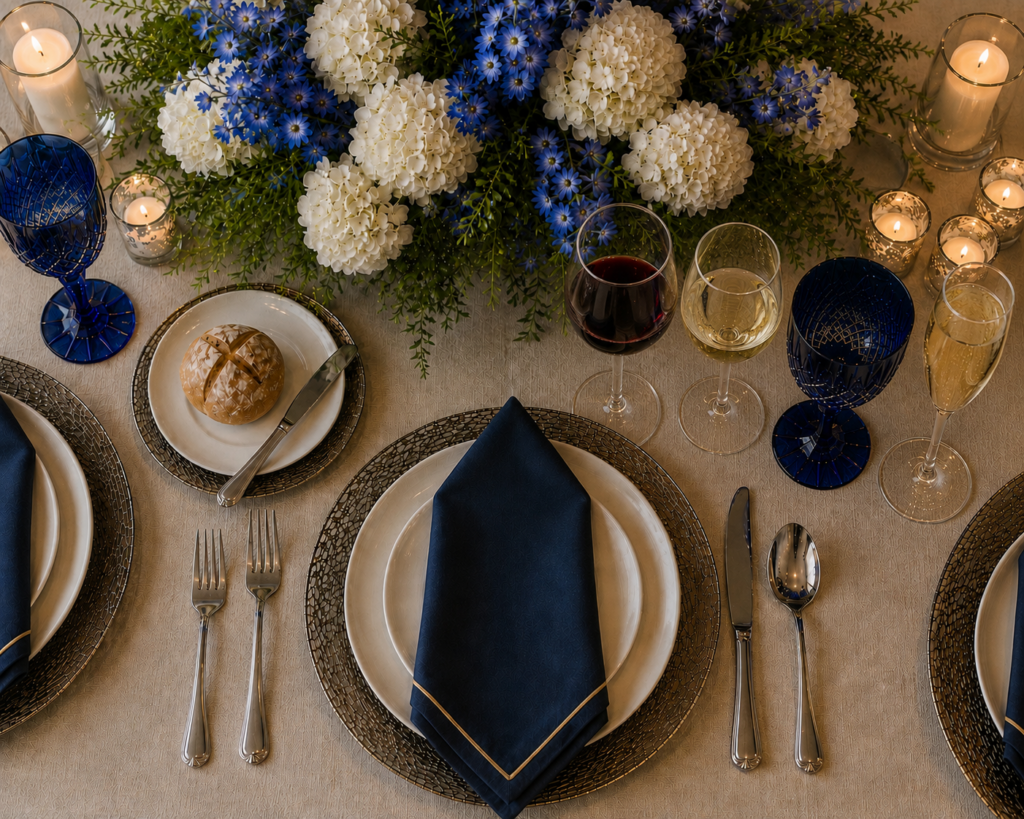
When serving wine, glasses are arranged just above the knife.
The water glass sits closest to the dinner plate.
White wine is typically placed slightly behind and to the right.
Red wine sits beside or slightly above the white wine glass.
Champagne flutes are added only when appropriate for the occasion.
For everyday entertaining, don’t feel pressured to include every possible piece of stemware. Beautiful entertaining is often about thoughtful simplicity rather than excess.
Napkin Placement
One of the questions I hear most often is where the napkin belongs.
Fortunately, there are several correct answers.
A napkin may be placed:
• On the dinner plate
• To the left of the forks
• Folded beneath the forks
• Inside a napkin ring
Each option is perfectly acceptable depending on the style of entertaining you’re creating.
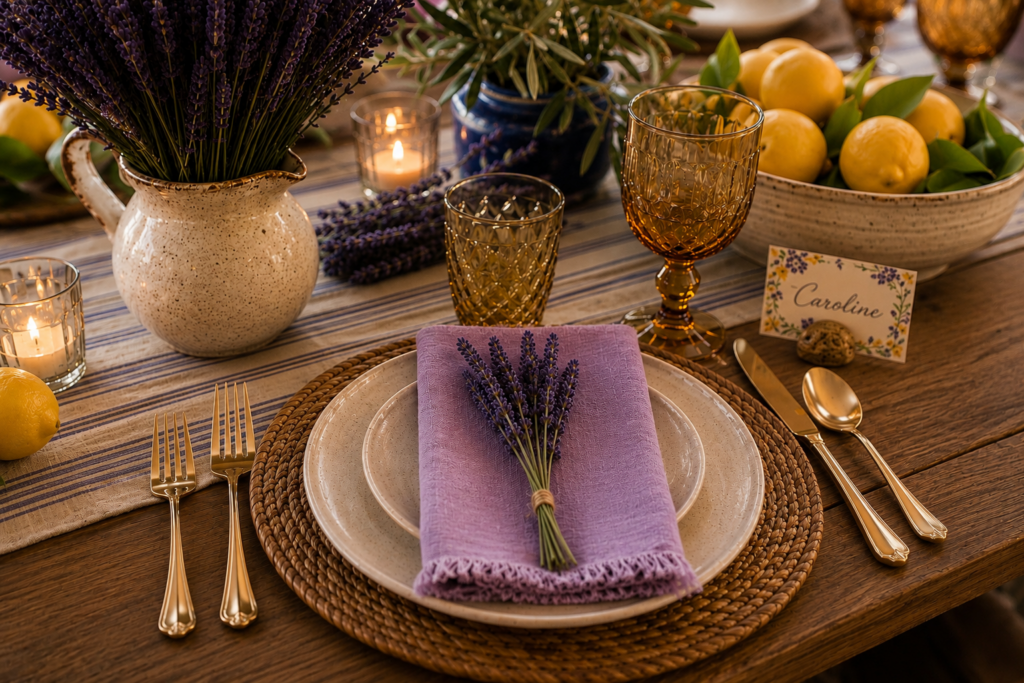
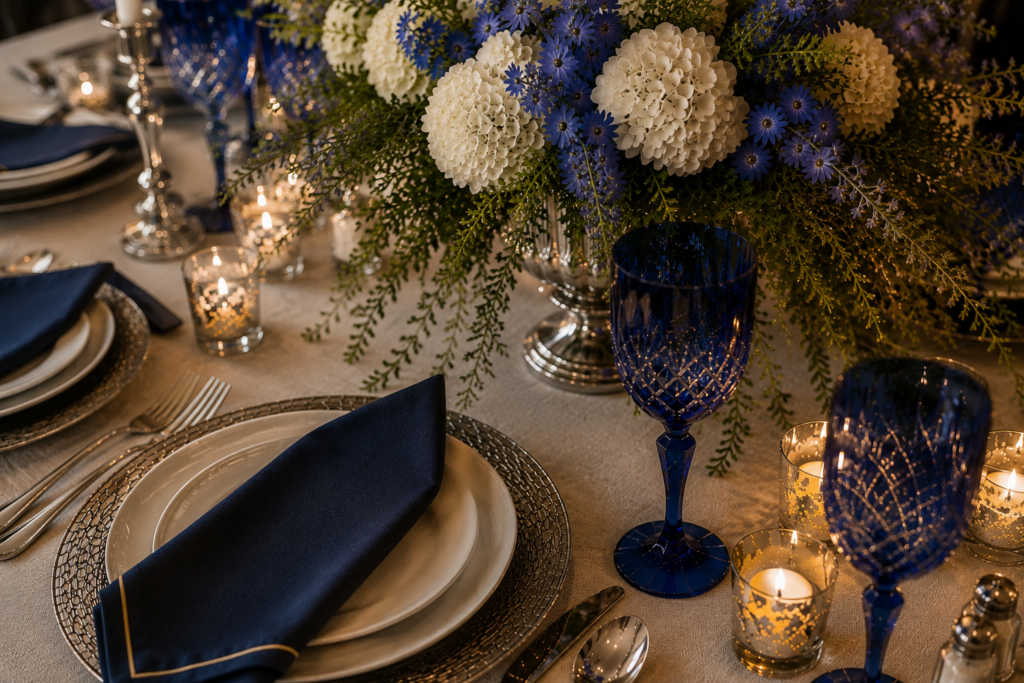
Personally, I love placing a linen napkin on the dinner plate with a beautiful napkin ring, a sprig of rosemary, or a personalized place card. It’s elegant without feeling overly formal.
✨Caroline’s Tip
Linen napkins instantly elevate almost any table. Even the simplest dinner feels more thoughtful when cloth napkins replace paper ones.
Formal vs. Casual Place Settings
Many people believe formal entertaining requires dozens of dishes and utensils.
It really doesn’t.
The only difference is that a formal table includes additional pieces for each course being served.
The same basic rules still apply.
Forks remain on the left.
Knives and spoons remain on the right.
Utensils are arranged in the order they will be used.
Glasses remain above the knife.
Bread plates remain above the forks.
Once you understand the basic layout, a formal table simply becomes an expanded version of the everyday place setting.
Common Table Setting Mistakes
Even experienced hosts occasionally make simple mistakes.
Some of the most common include:
Using too many utensils.
Placing the knife with the blade facing away from the plate.
Overcrowding the table with decorations.
Centerpieces that block conversation.
Using glassware that doesn’t match the meal.
Trying too hard to create a “perfect” table.
Remember, beautiful entertaining isn’t about impressing your guests.
It’s about making them feel comfortable enough to relax and enjoy your company.
Final Thoughts
Beautiful Entertaining Is About Making People Feel Welcome
The purpose of table etiquette has never been to impress people.
Its purpose is to remove distractions so everyone can focus on what matters most—sharing a wonderful meal and enjoying each other’s company.
A thoughtfully set table tells your guests they were worth the effort.
It creates an atmosphere that encourages people to slow down, linger a little longer, and enjoy the experience you’ve created.
Whether you’re serving takeout on a Tuesday evening or hosting Thanksgiving for thirty guests, beautiful entertaining begins with thoughtfulness, not perfection.
✨Caroline’s Tip
Some of the most memorable dinner parties I’ve attended weren’t the most elaborate.
They were the ones where conversation flowed easily, laughter filled the room, and everyone felt completely at home.
Never underestimate the power of candlelight, fresh flowers, and genuine hospitality.
Small Details Make the Biggest Impression
Luxury is rarely about owning the most expensive things.
Instead, it comes from thoughtful details.
Fresh flowers gathered from the garden.
Beautiful linen napkins.
Candles flickering during dinner.
A handwritten place card.
Pretty glassware.
A favorite serving platter that’s been in the family for years.
These little touches create warmth and personality that guests remember long after the meal has ended.
The most beautiful homes are not always the largest or the most expensive.
They’re the homes where people feel welcomed.
Final Thoughts
Table etiquette isn’t about following rigid rules.
It’s about creating a welcoming environment where family and friends can relax, enjoy one another’s company, and make lasting memories.
Once you remember the 5/4 Rule, work from the outside in, and keep bread on the left and drinks on the right, you’ve already mastered the fundamentals.
Everything else is simply adding your own personal style.
Whether your table is dressed with heirloom china, everyday dishes, or a simple bouquet of flowers from your garden, the goal remains exactly the same.
Create a table that invites people to gather.
Create a table that encourages conversation.
Most importantly, create a table people won’t want to leave.
Memories of Style
“Some of life’s sweetest memories begin around a beautifully set table. It isn’t the china, the crystal, or the silverware people remember most. It’s the laughter, the conversations, and the feeling of being welcomed.”
From a Simple Apartment Closet to a Dream Dressing Room
A beautiful closet isn’t defined by its size—it is defined by thoughtful design.
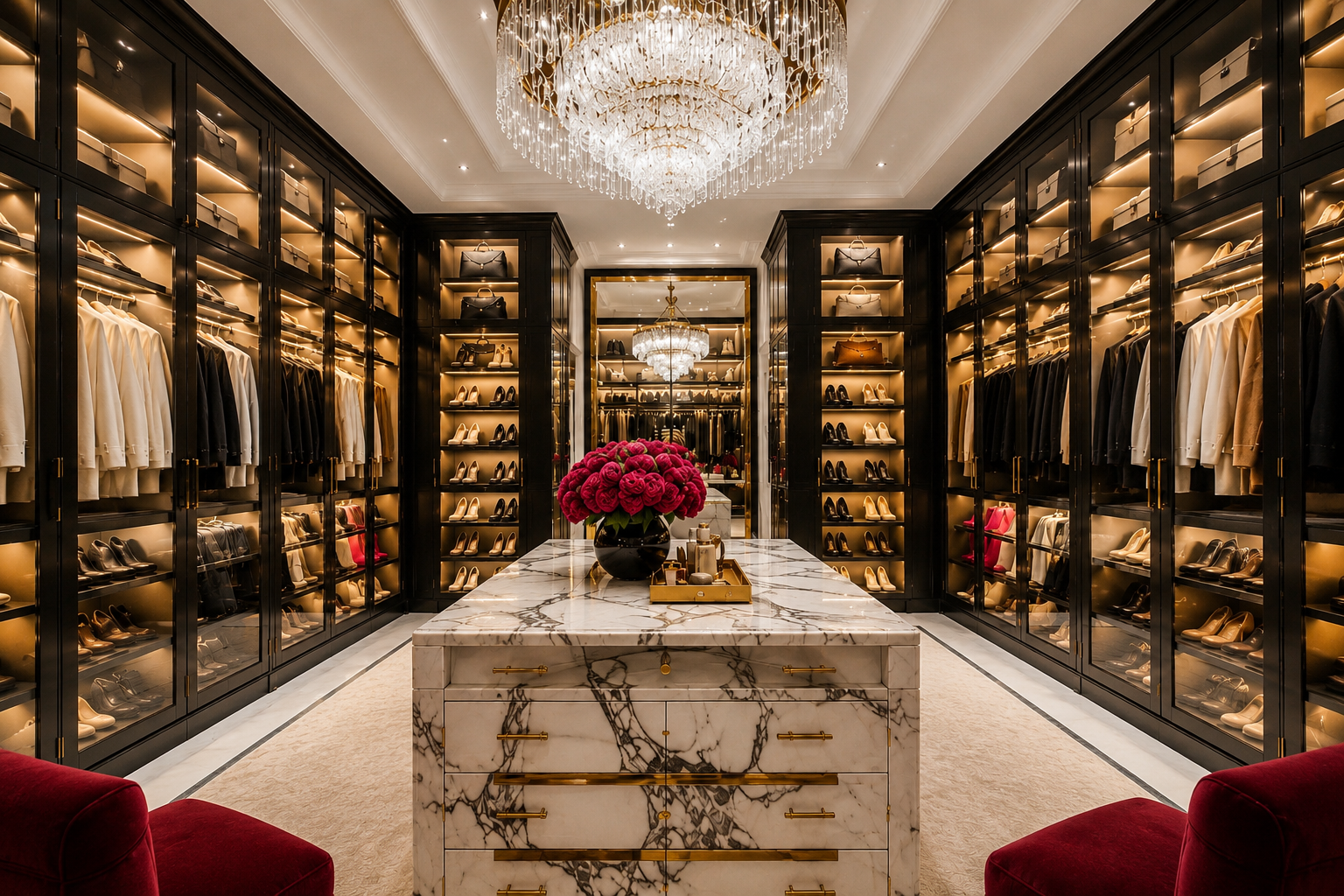
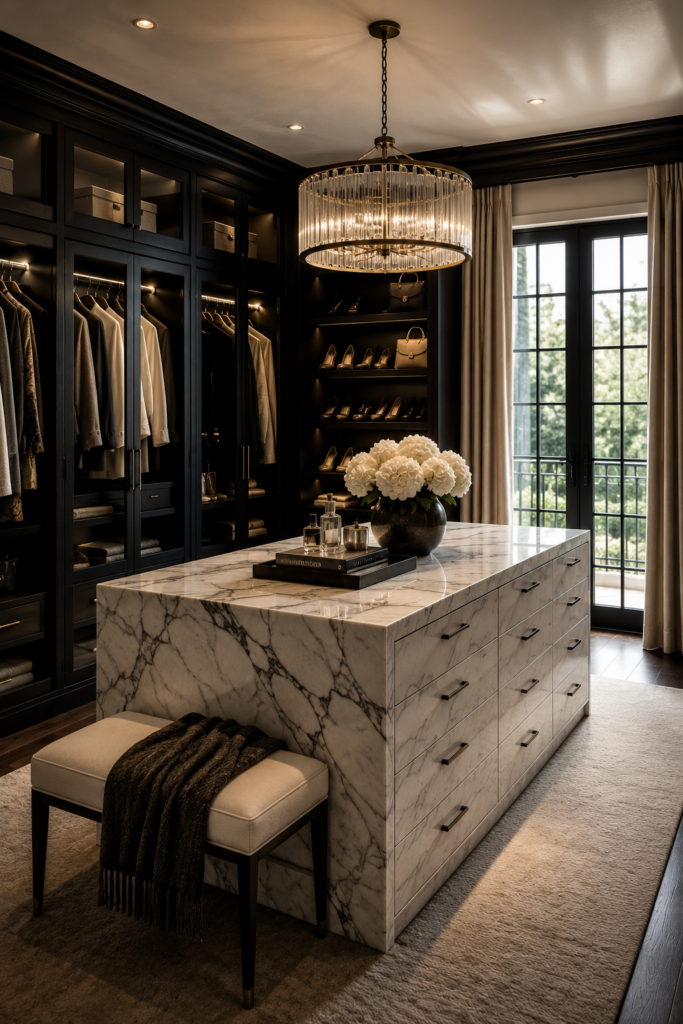
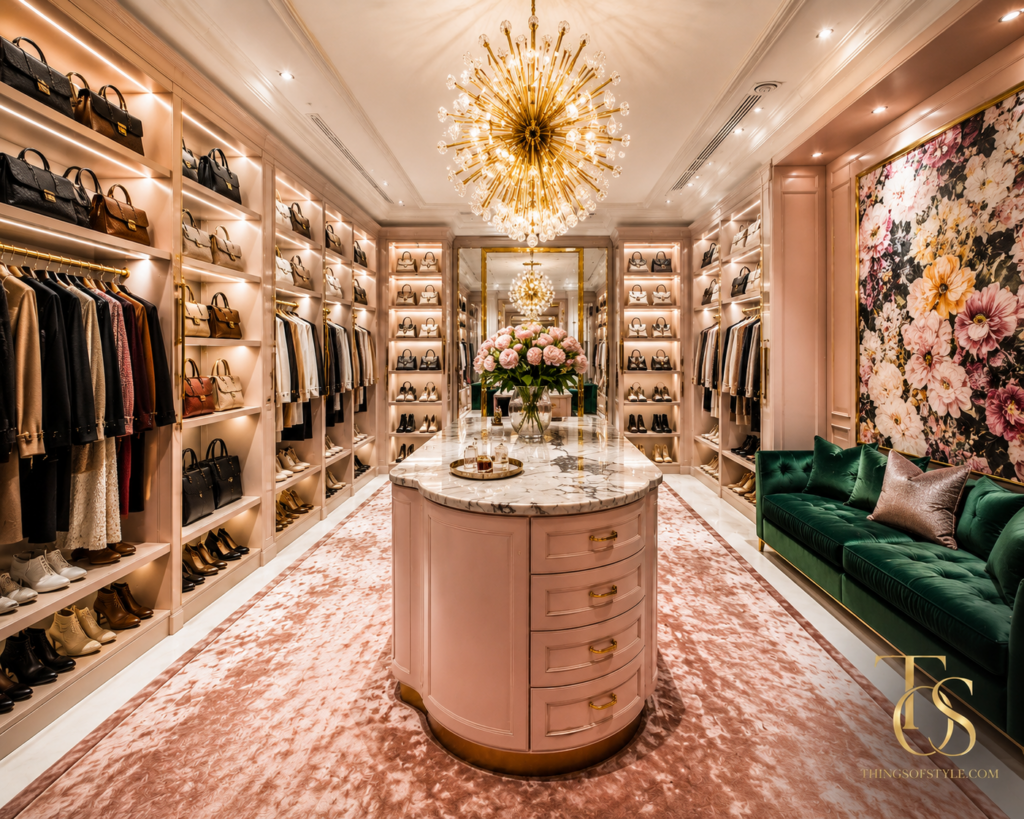
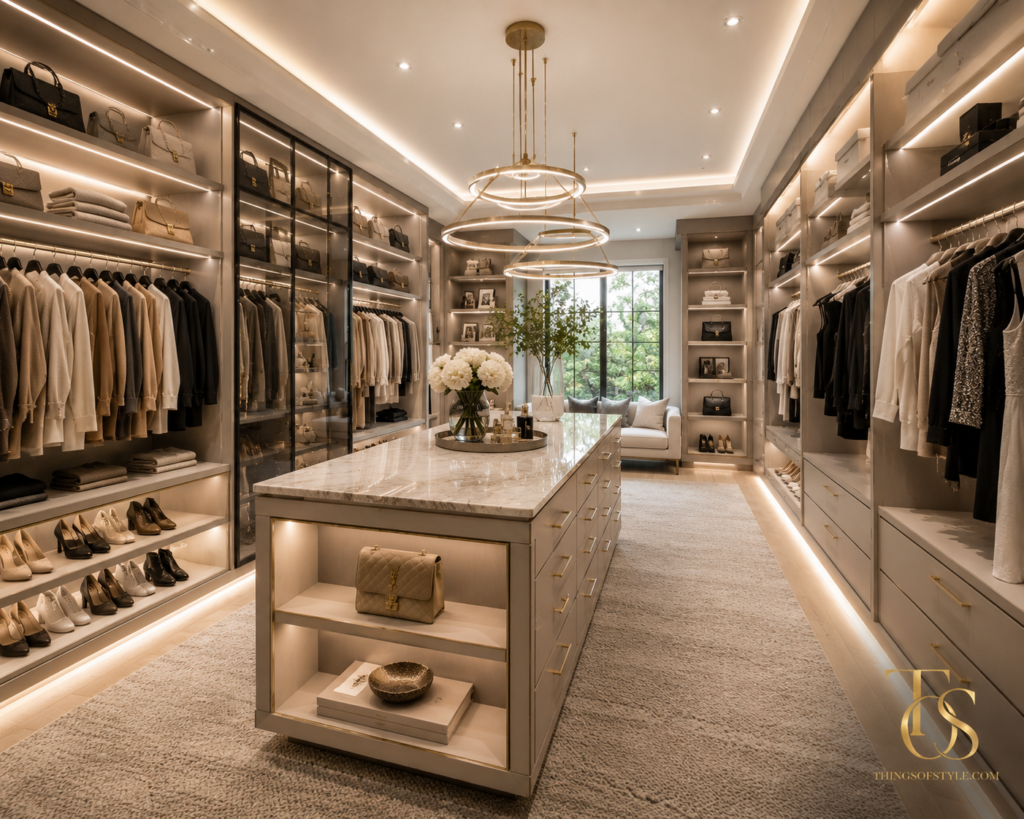
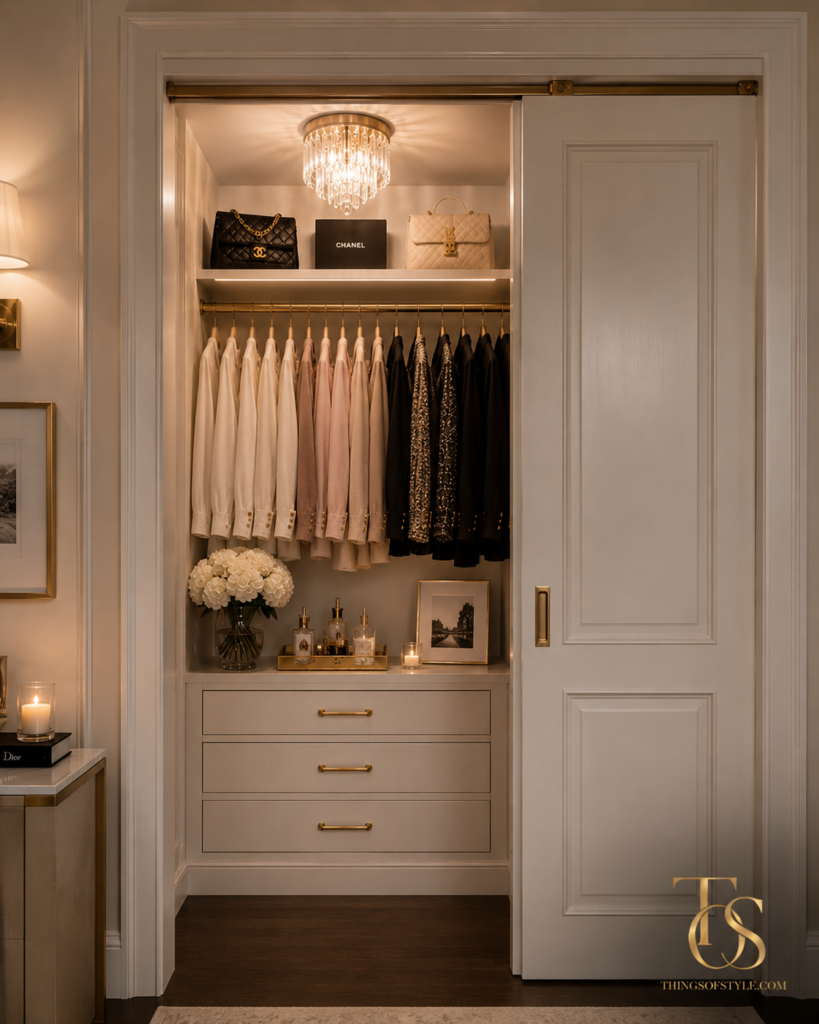
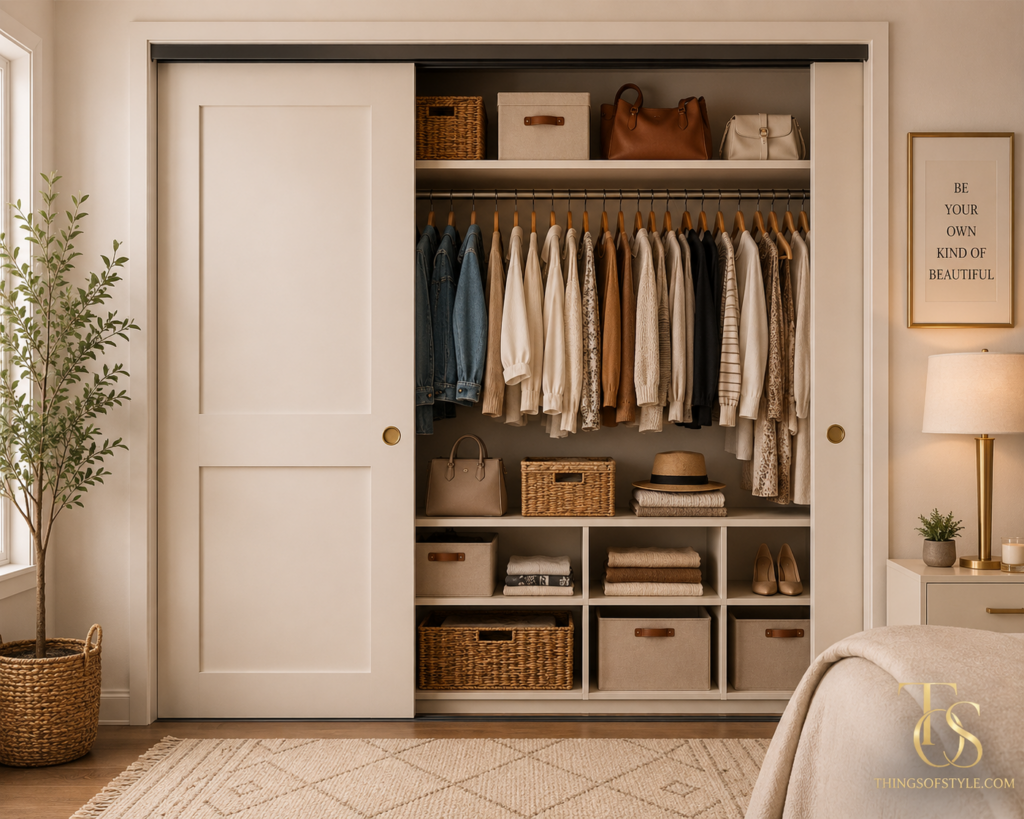
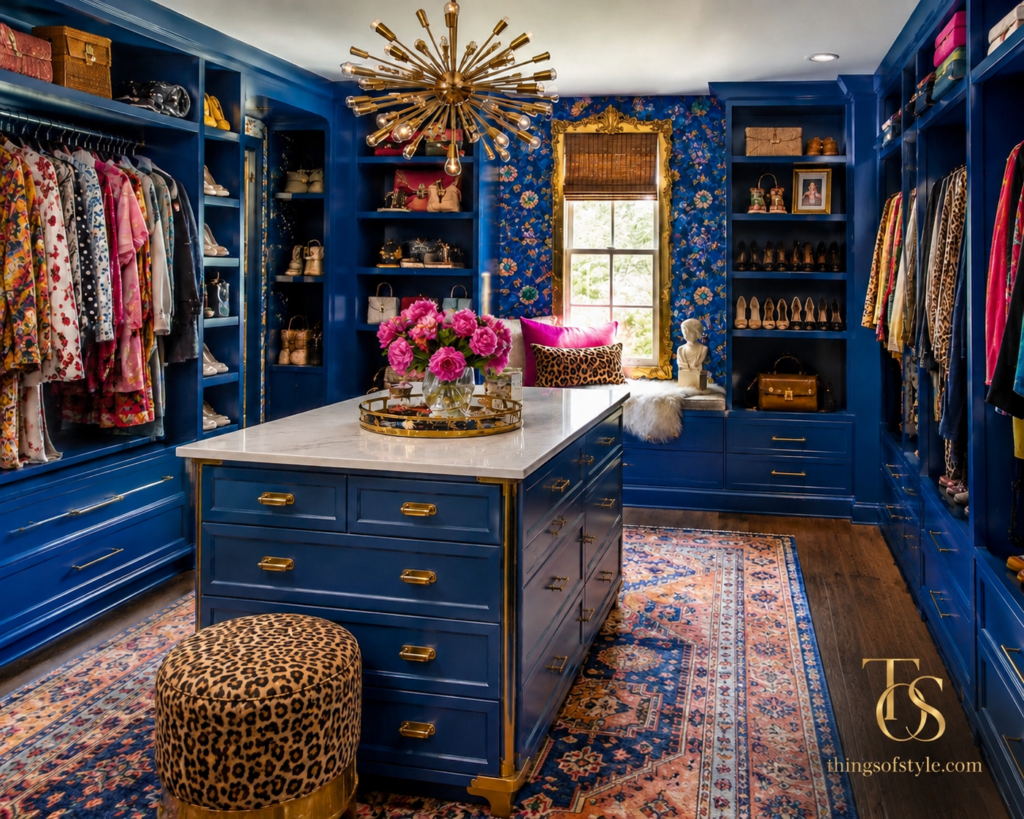
Some of the most inspiring closets in the world feature handcrafted cabinetry, marble islands, elegant lighting, and boutique-style displays. Others are nothing more than a simple apartment closet with sliding doors, matching hangers, and carefully organized storage. Surprisingly, both can feel luxurious.
The difference isn’t always the budget.
It’s understanding how professional designers create order, balance, warmth, and beauty.
Whether you’re dreaming of an extravagant dressing room or simply hoping to make better use of a standard bedroom closet, the same design principles apply. By focusing on organization, lighting, color, and carefully chosen accessories, almost any closet can become a space that feels more functional—and far more enjoyable to use every day.
Every Luxury Closet Begins with Organization
Before choosing cabinetry, lighting, or decorative finishes, professional designers focus on one thing first: organization.
A closet filled with clutter will never feel luxurious, regardless of how expensive the finishes may be.
Start by removing anything you no longer wear, separating seasonal clothing, and grouping similar items together. Dresses, jackets, sweaters, and shirts instantly create a cleaner appearance when organized by category and color.
✨ Things of Style Design Tip
Luxury begins with visual simplicity. Matching hangers, coordinated storage boxes, and neatly arranged shelves often make a greater impact than expensive renovations.
Today’s Luxury Closet Trends
Today’s custom closets are designed to feel less like storage rooms and more like elegant dressing spaces.
Some of the most popular features include:
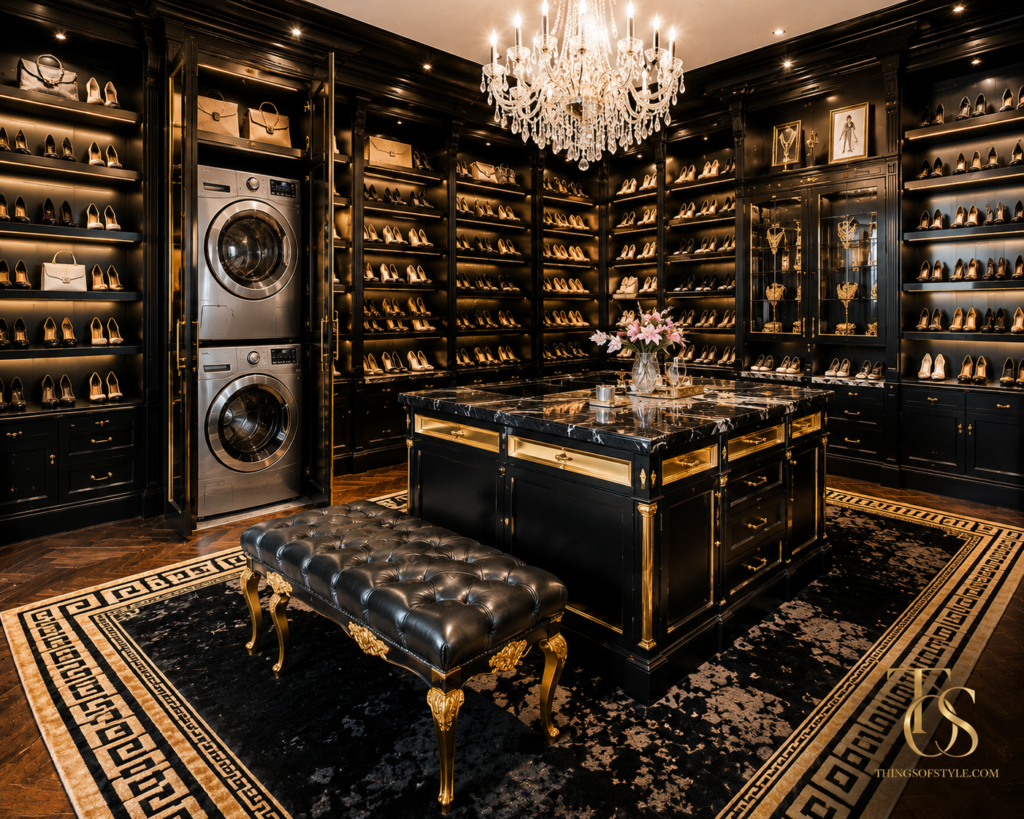
• Boutique-inspired display shelving
• Decorative lighting and chandeliers
• Marble or quartz islands
• Built-in jewelry storage
• Handbag display shelves
• Glass cabinet doors
• Hidden laundry areas
• Comfortable seating
• Decorative rugs
• Fresh flowers and artwork
Many of these ideas can be incorporated into existing closets without requiring a complete remodel.
Light or Dark? Choosing Your Style
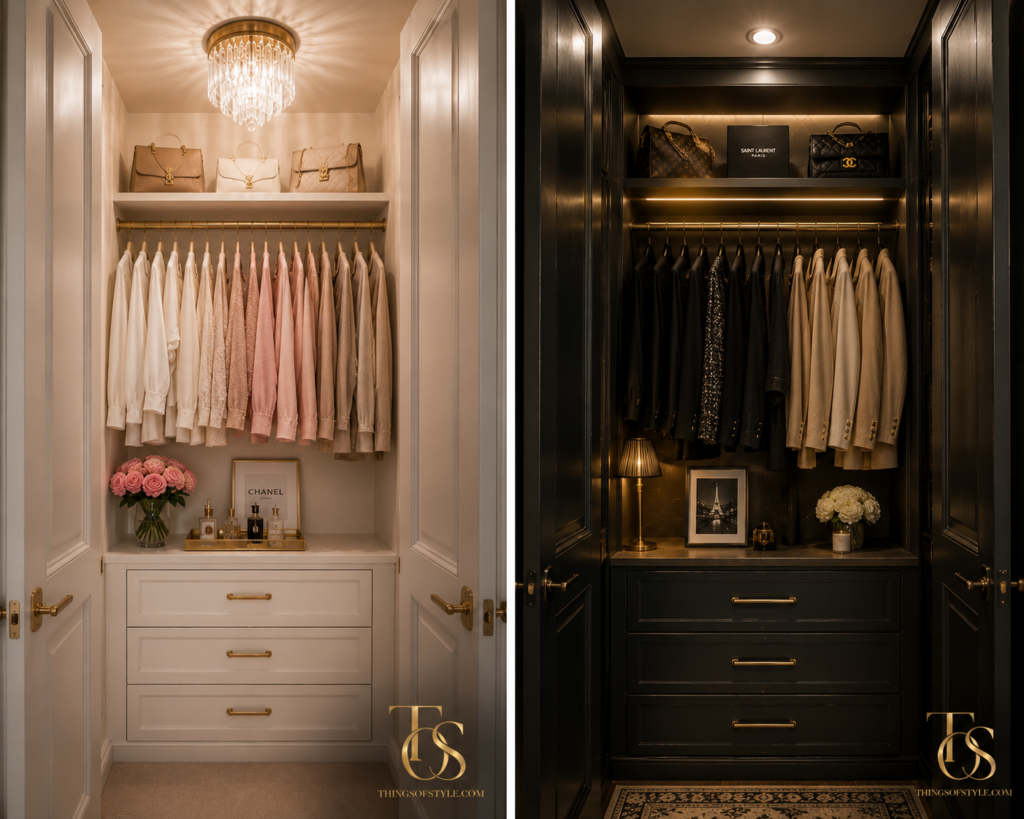
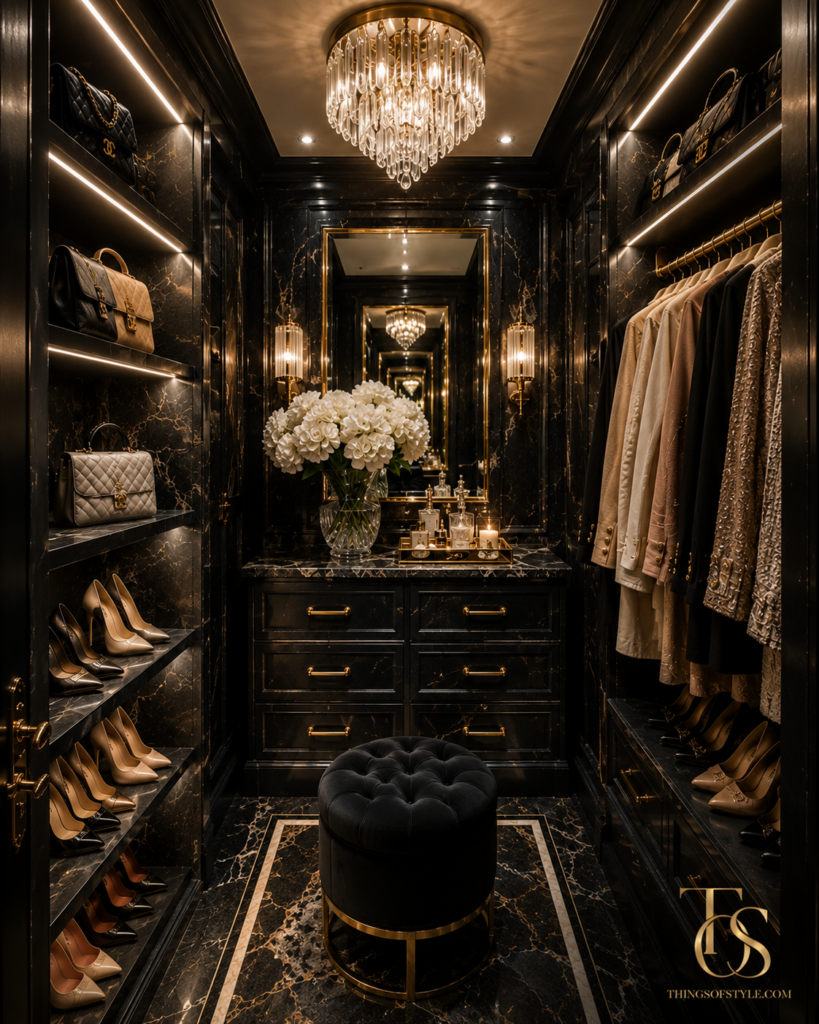
Dark cabinetry creates drama and sophistication, while lighter finishes make smaller spaces feel brighter and more open.
Neither is better.
Instead, choose the look that complements the rest of your home’s design. Warm wood tones, soft whites, rich charcoal, and natural textures all continue to remain timeless choices.
✨ Things of Style Design Tip
Layer your lighting. Overhead lighting combined with LED shelf lighting creates depth while making clothing colors easier to see.
Beautiful Spaces Should Also Be Practical
Luxury isn’t only about appearance.
One of today’s smartest trends is designing closets that work harder.
Hidden laundry appliances, pull-out hampers, valet rods, charging stations, ironing storage, and built-in folding counters make everyday routines easier while maintaining a clean appearance.
A beautiful room that functions well becomes one you’ll appreciate every single day.
Modern Luxury Is Becoming More Relaxed
One of the biggest shifts in closet design is moving away from excess.
Today’s luxury emphasizes thoughtful editing instead of filling every shelf.
Open space, carefully displayed accessories, natural textures, and warm neutral colors create an atmosphere that feels calm instead of crowded.
Sometimes what you choose not to display is just as important as what you do.
Small Closets Can Make a Big Impression
Not every home has room for a walk-in dressing room.
Fortunately, luxury design principles work just as well in compact spaces.
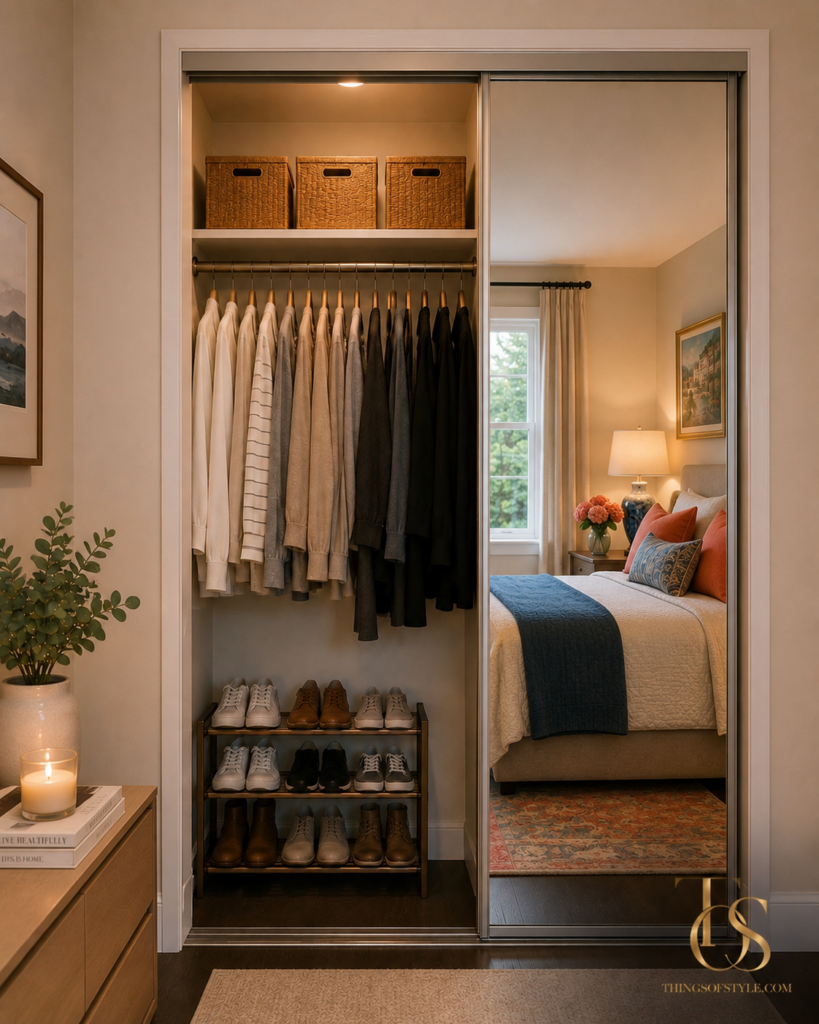
Full-height cabinetry, matching organizers, mirrors, quality lighting, and a carefully selected color palette can make even modest closets feel custom designed.
✨ Things of Style Design Tip
When storage reaches the ceiling, a room immediately appears taller, cleaner, and more professionally designed.
Luxury Lives in the Details
It’s rarely one dramatic feature that creates a memorable closet.
Instead, luxury comes from the combination of carefully chosen materials, beautiful hardware, quality lighting, coordinated accessories, and thoughtful organization.
The little details create the lasting impression.
Don’t Underestimate a Standard Closet
Many homeowners believe luxury is reserved for custom homes.
The truth is that simple improvements can dramatically change an ordinary closet.
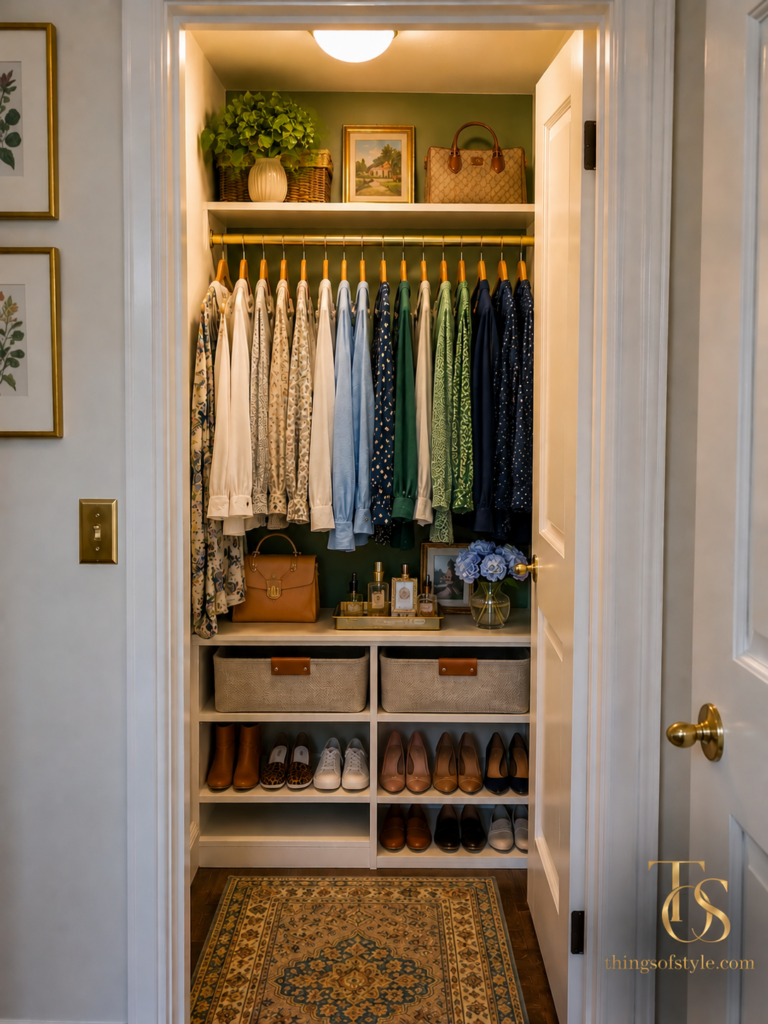
Matching hangers, attractive storage boxes, labeled bins, shoe organizers, shelf dividers, and proper lighting often produce the biggest transformation for the smallest investment.
Apartment Closets Can Be Beautiful Too
Apartment living doesn’t have to limit your style.
Even builder-grade sliding-door closets can become attractive and highly functional with thoughtful organization and a few affordable upgrades.
By maximizing vertical storage, using coordinated containers, and eliminating visual clutter, even modest closets can feel polished and inviting.
Work With What You Have
Rather than comparing your home to someone else’s, begin by making the very best use of your existing space.
Every thoughtful improvement adds both beauty and function.
Luxury is not measured by square footage.
It’s measured by how intentionally a space serves your daily life.
Layer Your Storage Like a Custom Closet
One of the biggest differences between a builder-grade closet and a professionally designed closet is that luxury closets use every inch efficiently.
Instead of relying on one hanging rod and a single shelf, custom closets combine several storage solutions.
Use a combination of:
✔ Double hanging rods for shirts and pants
✔ Long hanging space for dresses and coats
✔ Adjustable shelves
✔ Drawers for folded clothing
✔ Storage boxes for seasonal items
✔ Shoe storage
✔ Jewelry organizers
✔ Hooks for robes and handbags
Even if you only have a reach-in closet, adding inexpensive organizers instantly creates a cleaner, more custom appearance.
Think Like a Designer, Not Just a Homeowner
Professional designers don’t simply organize closets.
They create a boutique experience.
Ask yourself:
• Can I easily see everything?
• Is there visual balance?
• Are similar colors grouped together?
• Are shoes displayed neatly?
• Is there empty breathing room?
Luxury doesn’t mean filling every shelf.
Luxury means intentional space.
A closet that feels open often appears much more expensive than one packed with clothing.
Add Small Luxury Touches That Make a Big Difference
You don’t need a $50,000 renovation to create a luxurious feeling.
Simple upgrades can completely transform the space.
Ideas include:
• Matching velvet hangers
• Woven storage baskets
• Fabric storage bins
• Cedar blocks
• Drawer dividers
• Jewelry trays
• Decorative boxes
• LED motion lighting
• Full-length mirror
• Fresh flowers
• Scent diffuser
• Plush bench or ottoman
These small details create the feeling of walking into your own boutique every morning.
Final Thoughts
Whether your dream closet includes a crystal chandelier and marble island or simply neatly folded sweaters and matching storage boxes, the goal remains the same: create a space that feels calm, organized, and enjoyable to use.
Thoughtful design isn’t about spending the most money.
It’s about making the most of the space you already have.
“The most luxurious homes aren’t always the largest. They’re the ones where every space is thoughtfully designed, beautifully organized, and a pleasure to live in.”
Some days you can tackle a project with ease. Other days, you may not have it in you. Whenever a project feels overwhelming, I remind myself to take small bites.
In fact, it’s a simple rule I’ve taught my children for years:
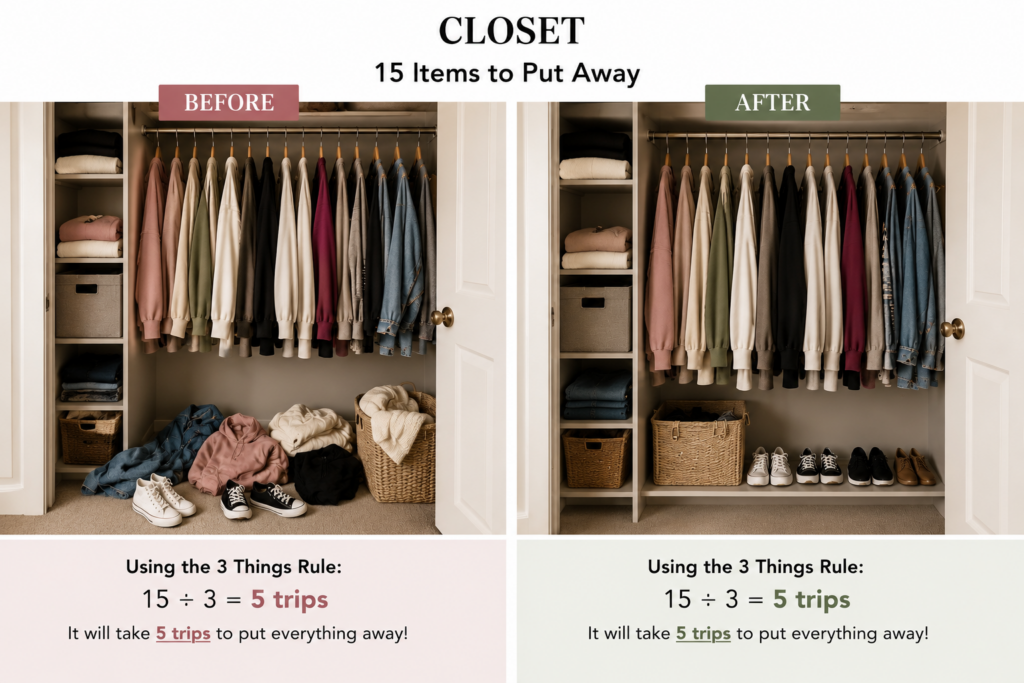
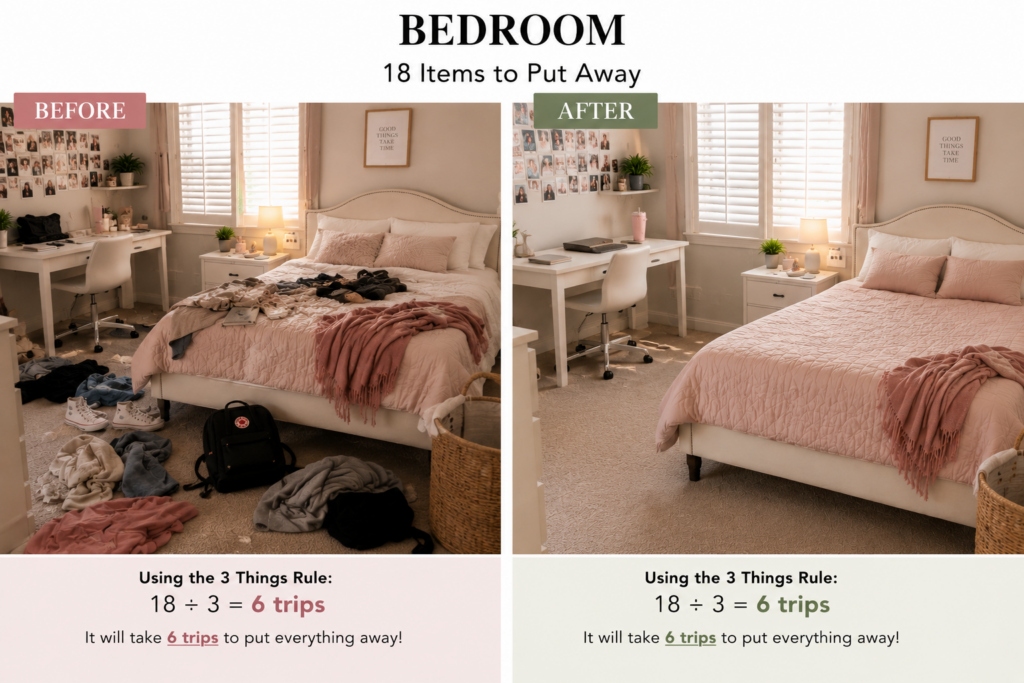
Just do three things.
Not thirty.
Not the entire project.
Just three.
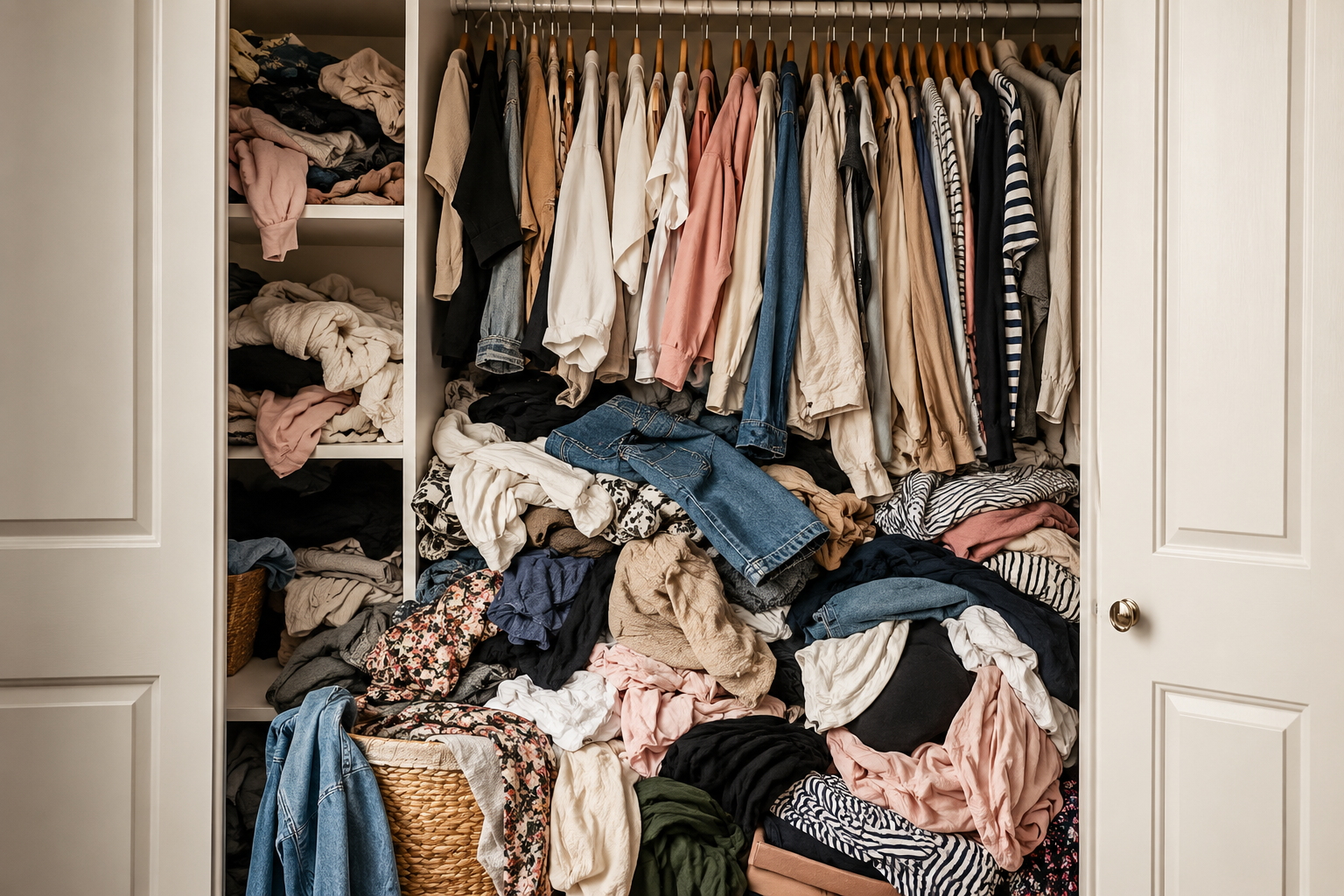
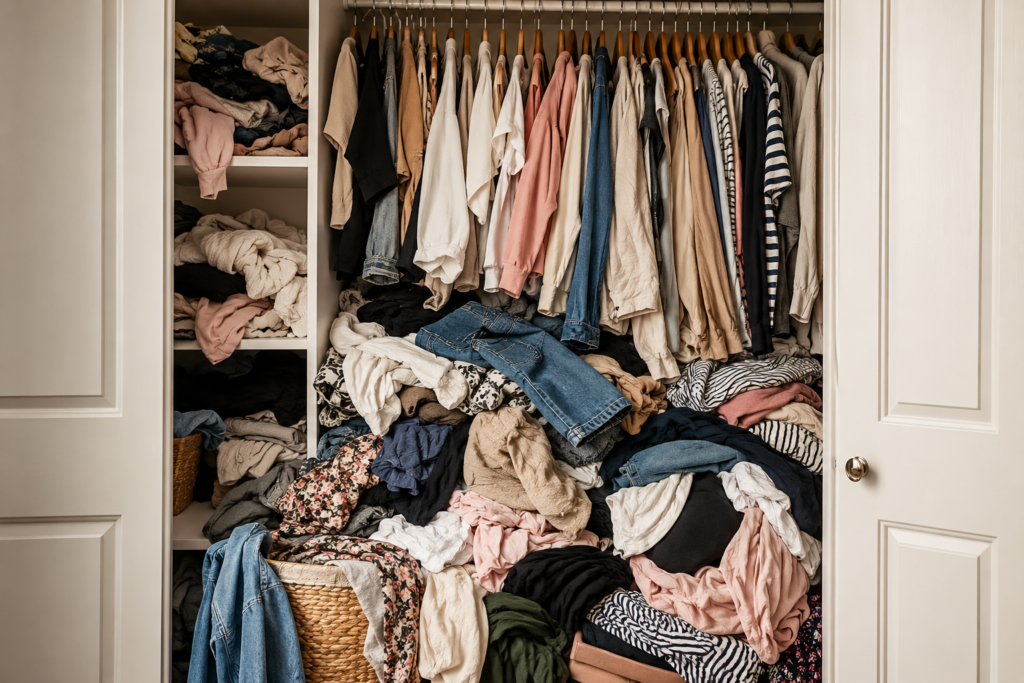
If your closet is overflowing, put away three items every time you walk in.
If the kitchen is a mess, put away three dishes before leaving the room.
If you’re sorting paperwork, file three papers.
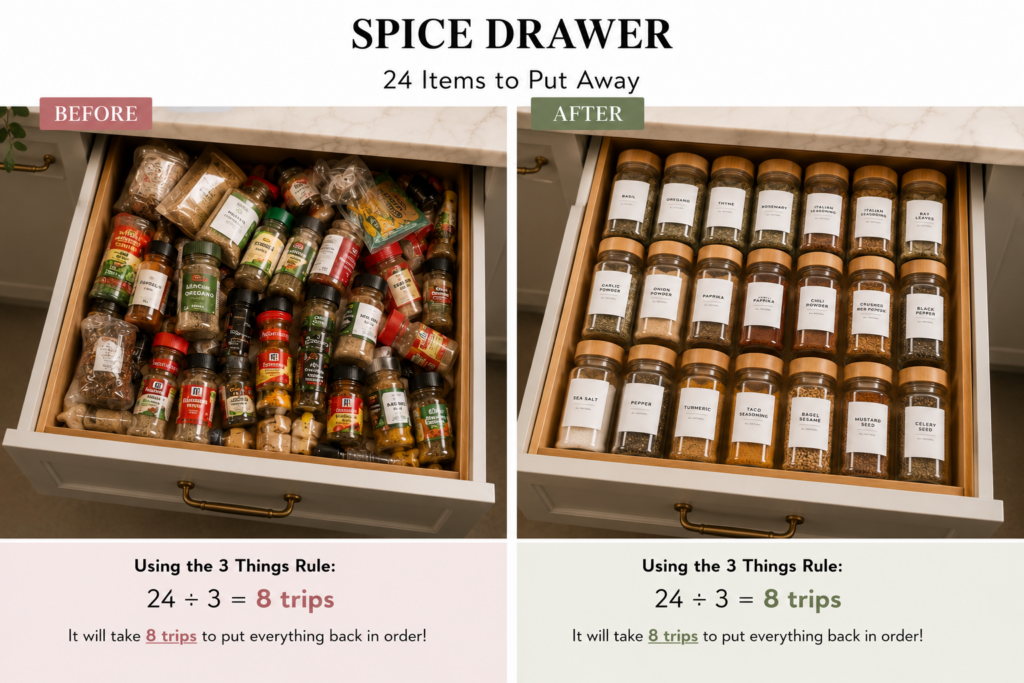
If you’re organizing a pantry, fill three spice jars.
That’s it.
The reason this works is simple. Most of us don’t procrastinate because we’re lazy. We procrastinate because a task feels too big.
When we tell ourselves we have to organize the entire closet, clean the entire garage, or finish the entire project, our brain often decides it’s easier to do nothing at all.
But three things?
Anyone can do three things.
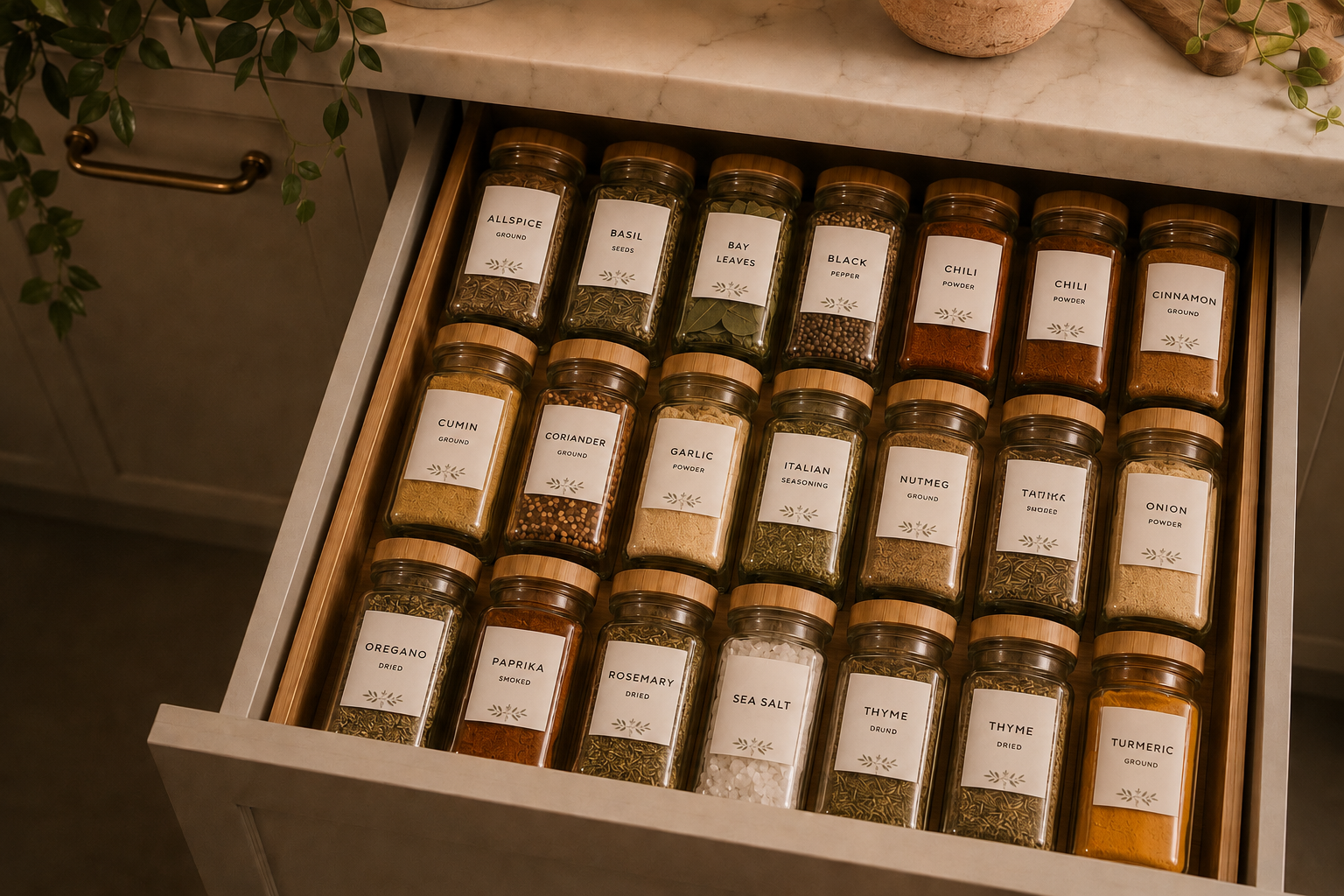
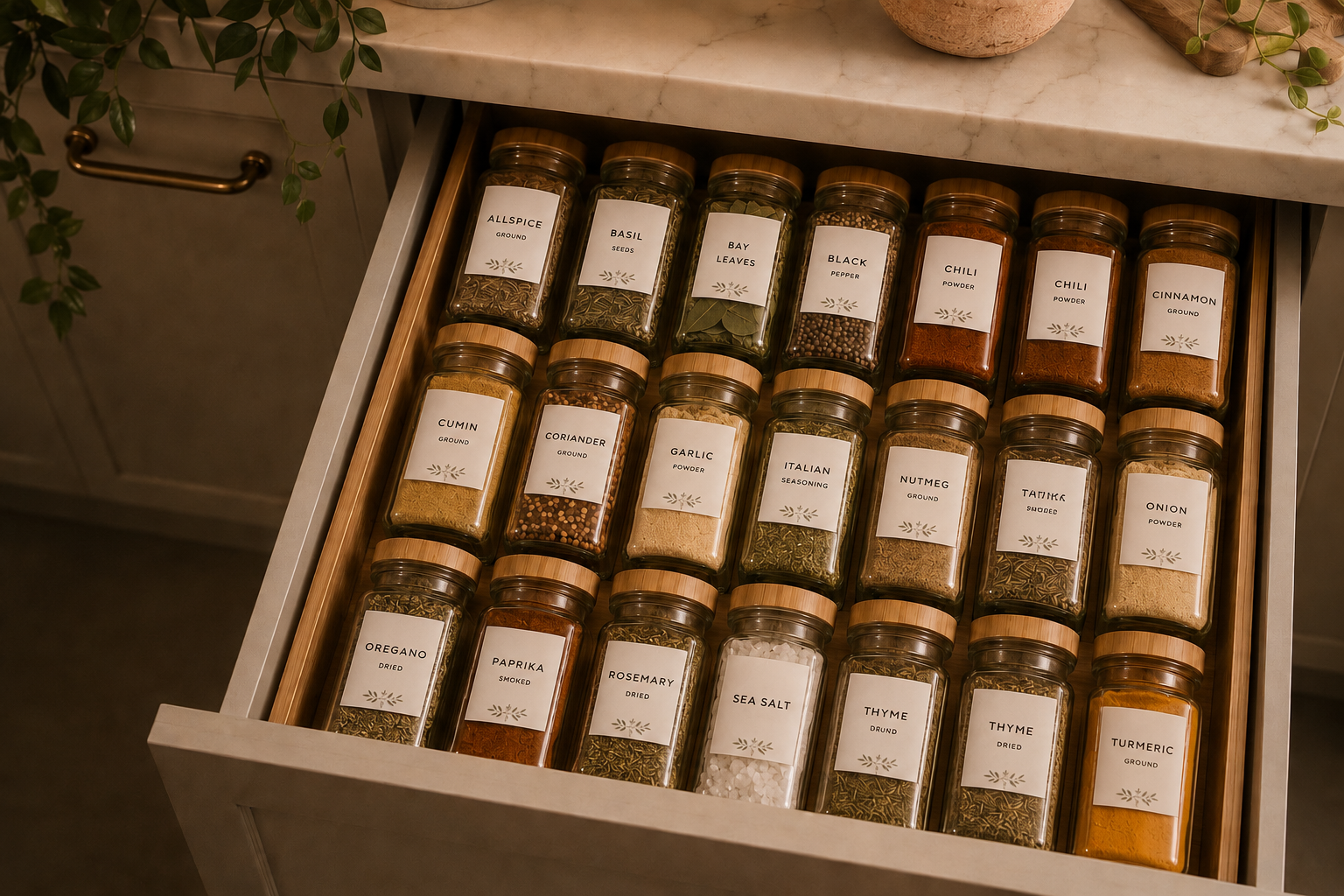
One of my favorite examples is creating an organized and updated spice rack, drawer or cabinet. Filling, labeling, and arranging dozens of jars can feel like a project you’ll get to “someday.”
Instead, fill three jars.
The next time you’re in the pantry or open the drawer, fill three more.
Then three more.
Before you know it, the project is finished without ever feeling overwhelming.
I call these small bites.
Small bites create momentum.
Momentum creates motivation.
And motivation makes it easier to take the next step.
I’ve used the 3 Things Rule for years, and I’ve taught my children to use it too. Whether you’re tackling a cluttered closet, organizing a pantry, or simply trying to make progress on something you’ve been avoiding, don’t focus on finishing.
Just do three things (if you can do more than three, great!).
Then do three more each time you walk into that room, open that closet, reach into your purse or get into the car. Whatever, or wherever that mess or project may be.
Some days you can tackle a project with ease. Other days, you may not have it in you.
How to Organize a Spice Drawer for a Beautiful, Functional Kitchen
A well-organized spice drawer is one of the simplest ways to elevate your kitchen. Not only does it save time while cooking, but it also creates a sense of calm and order that makes everyday tasks more enjoyable.
Whether you’re working with a dedicated spice drawer, cabinet shelf, or countertop rack, creating a beautiful system allows you to see exactly what you have, reduce waste, and streamline meal preparation.
Why Organize Your Spices?
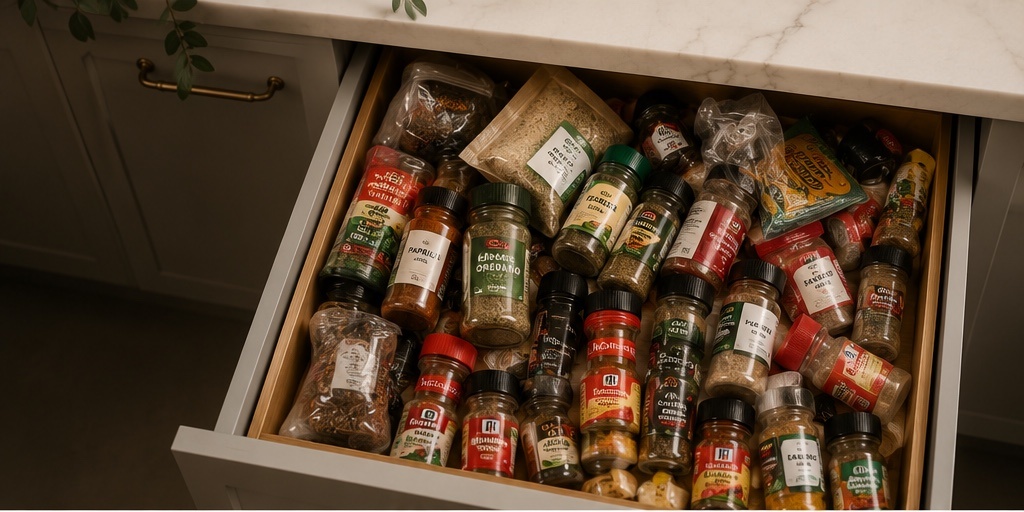
Most kitchens accumulate spices over time. Duplicate containers, expired seasonings, and mismatched bottles can quickly turn an otherwise beautiful kitchen into a source of frustration.
A thoughtfully organized spice collection helps you:
✔ Find spices instantly while cooking
✔ Avoid purchasing duplicates
✔ Maximize storage space
✔ Create a cleaner, more cohesive kitchen aesthetic
✔ Make everyday cooking more enjoyable
Step 1: Empty Everything
Remove every spice from your drawer, cabinet, or rack.
As you sort through your collection:
Check expiration dates
Discard stale spices
Combine duplicates
Separate frequently used spices from occasional ingredients
This first step often creates significantly more storage space than expected.
Step 2: Choose Uniform Containers
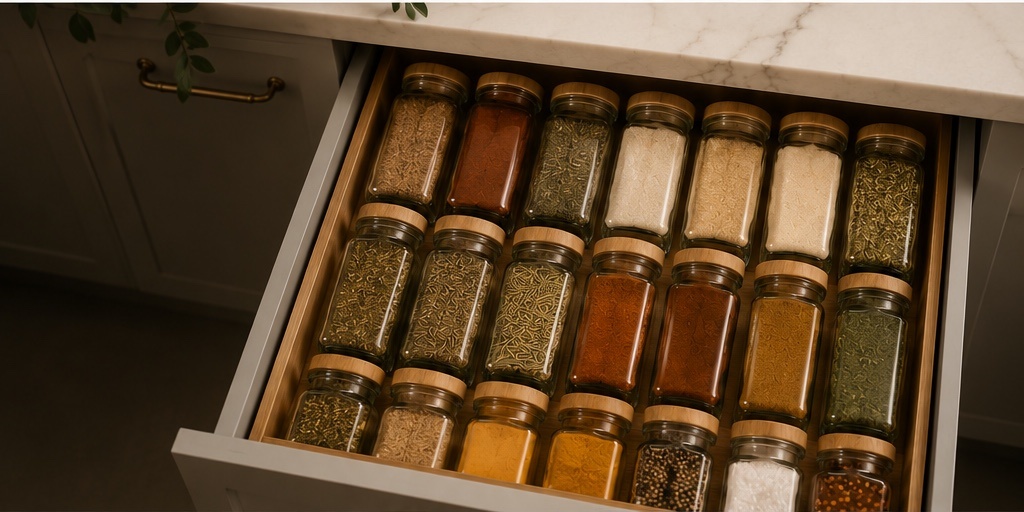
One of the easiest ways to create a professionally organized look is by transferring spices into matching containers.
Benefits include:
Cleaner visual appearance
Easier labeling
Better use of available space
Improved visibility
Glass jars with bamboo lids create a timeless look that complements nearly any kitchen style.
Step 3: Label Everything Clearly
Consistent labeling transforms a collection of jars into a functional system.
Consider including:
Spice name
Optional purchase date
Optional refill date
Simple black-on-white labels create a clean, elevated appearance while remaining easy to read.
Step 4: Create Categories
Grouping similar spices together helps maintain organization over time.
The best organization systems support the way you actually cook.
Consider arranging spices:
Alphabetically
By frequency of use
By cooking style
By category
Place everyday favorites closest to the front for easy access.
Drawer vs. Spice Rack
Spice Drawer Benefits
Clean, uncluttered appearance
Easy visibility from above
Keeps counters clear
Creates a luxury kitchen feel
Spice Rack Benefits
Ideal for smaller kitchens
Easy access while cooking
Great use of vertical space
Both systems work beautifully when organized thoughtfully.
Maintaining Your System
A few simple habits help keep your spice organization looking beautiful:
Refill containers before they become completely empty
Return jars to their designated location after use
Review expiration dates twice per year
Avoid buying duplicates by checking inventory first
The Final Result
A thoughtfully organized spice drawer is more than a storage solution—it’s a small luxury that makes everyday living feel easier and more intentional.
When every jar has a place and every ingredient is easy to find, cooking becomes less about searching and more about enjoying the process.
If this process seems overwhelming. Practice my “3 things” rule (see my blog Titled The three thing rule: How to Stop Overwhelm before It Starts). Fill and label three jars a day. Before you know it the project will be complete.
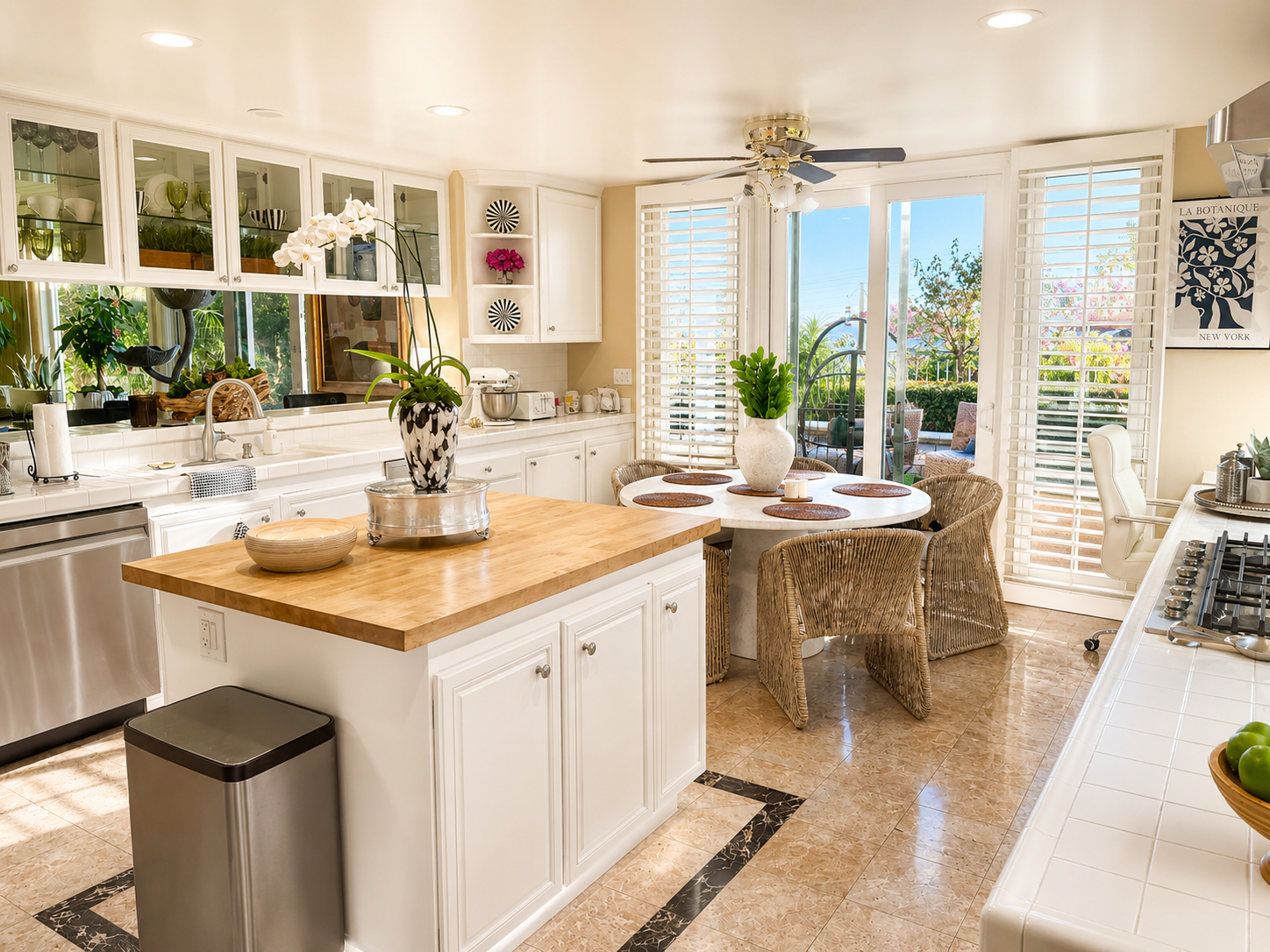
The kitchen is often the hardest-working room in the house. It’s where meals are made, conversations happen, family and pets gather, and daily routines unfold from morning to night.
Rather than aiming for picture-perfect organization, I focus on systems that make everyday life easier. A well-organized kitchen should feel functional, welcoming, and suited to the way your family lives.
Today I’m sharing a few simple organization ideas and favorite spaces in our kitchen that help keep this busy room running smoothly while still feeling warm and lived in.
Organize Around Everyday Habits
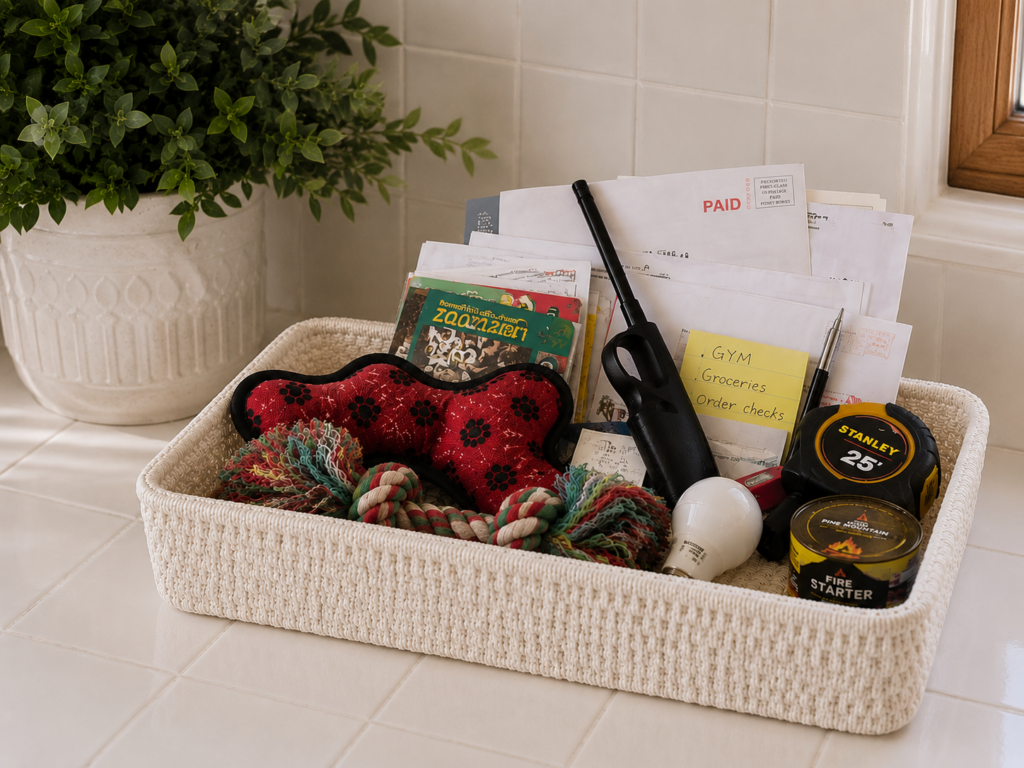
Mail, pet toys, tape measures, fireplace lighters, and other small items that accumulate throughout the week all need a place to go. Instead of moving them from one surface to another, a dedicated basket keeps them contained and easy to find.
The best organization systems support everyday life rather than fighting against it.
Small Solutions Often Make the Biggest Difference
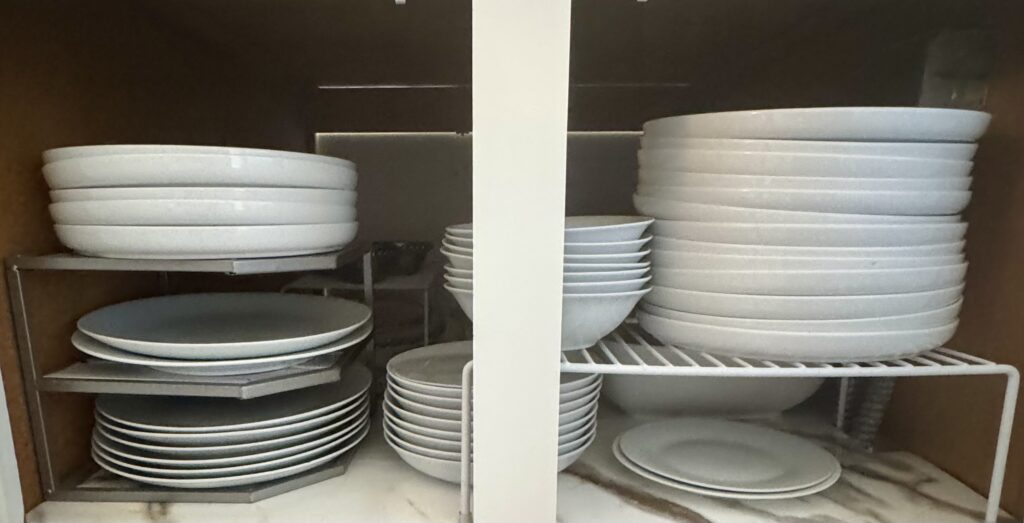
Sometimes the simplest organizing products are the most effective. Inexpensive cabinet risers created extra storage space and made everyday dishes easier to access.
Small changes like these can greatly improve a kitchen’s function without requiring a renovation or custom cabinetry.
Create Dedicated Zones
Dedicated areas for daily routines help reduce clutter and make a kitchen feel more intentional.
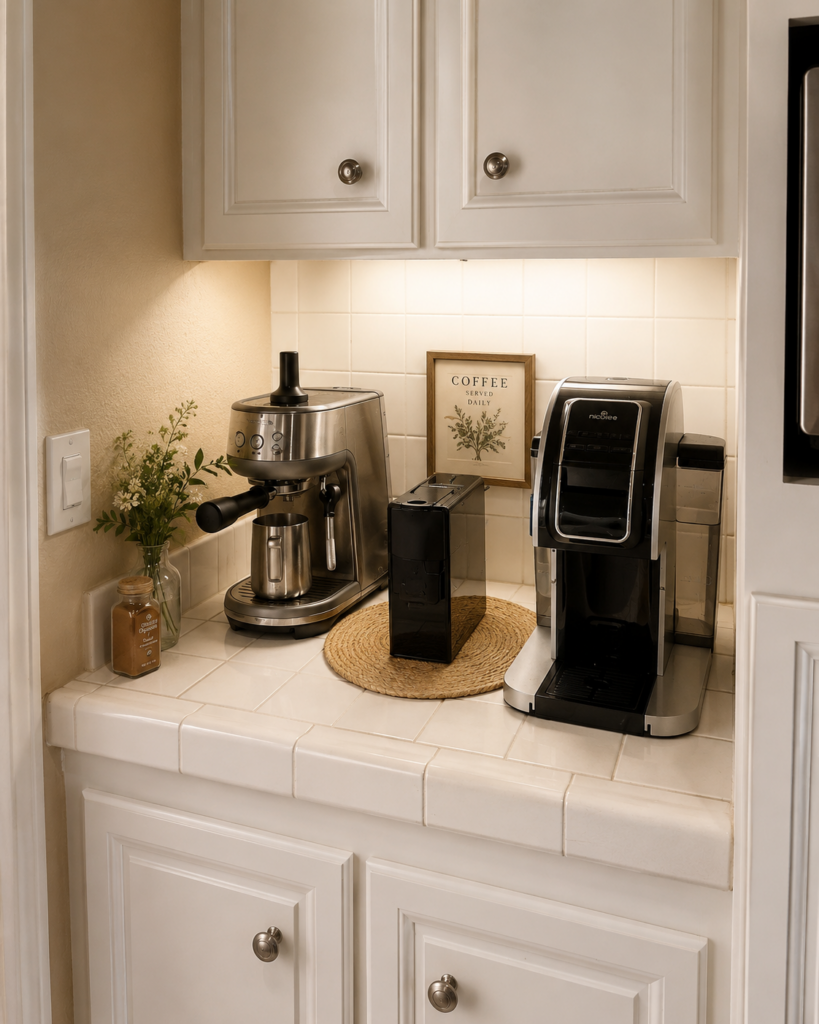
A small coffee station keeps everything needed for busy mornings in one place while freeing up counter space elsewhere. Even a modest corner can feel special with thoughtful organization and a few personal touches.
Organization Can Also Be Meaningful
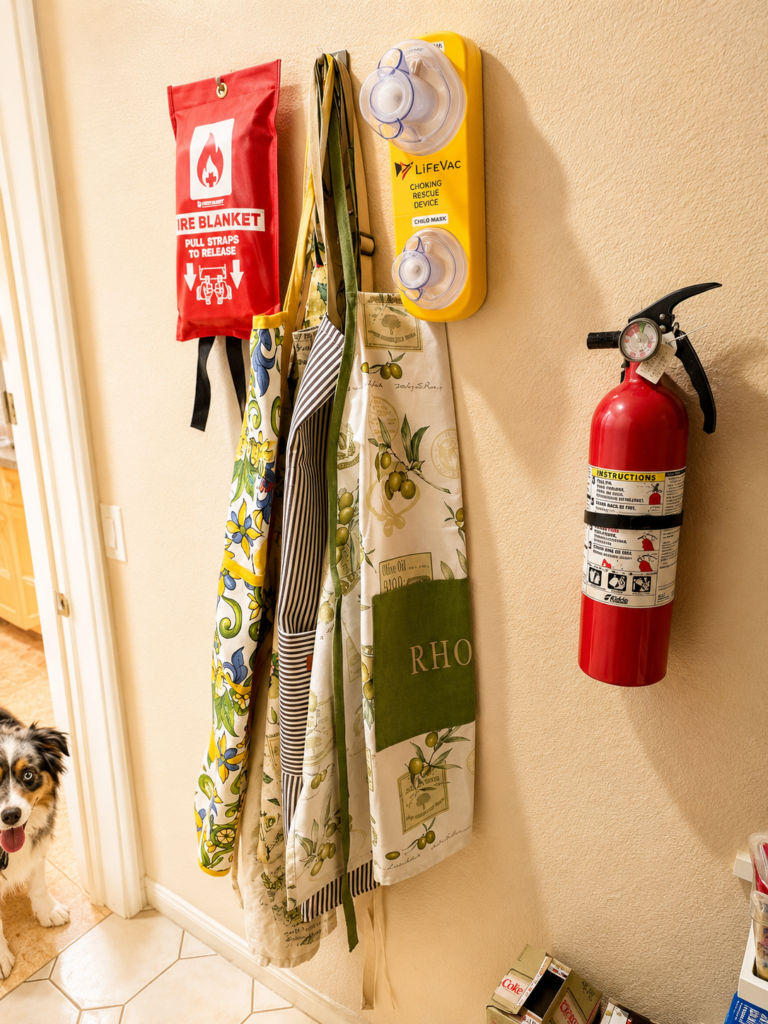
Some of my favorite kitchen items are aprons collected during travels to destinations known for great food and culinary traditions. Hanging in the pantry, they serve as reminders of special places, memorable meals, and shared experiences.
Every time I walk into the pantry, they bring back wonderful memories of destinations we’ve explored, meals we’ve shared, and experiences that are still special years later.
Alongside those memories are practical safety essentials. Fire extinguishers, fire blankets, and anti-choking rescue devices may not be decorative, but keeping them visible and accessible provides peace of mind.
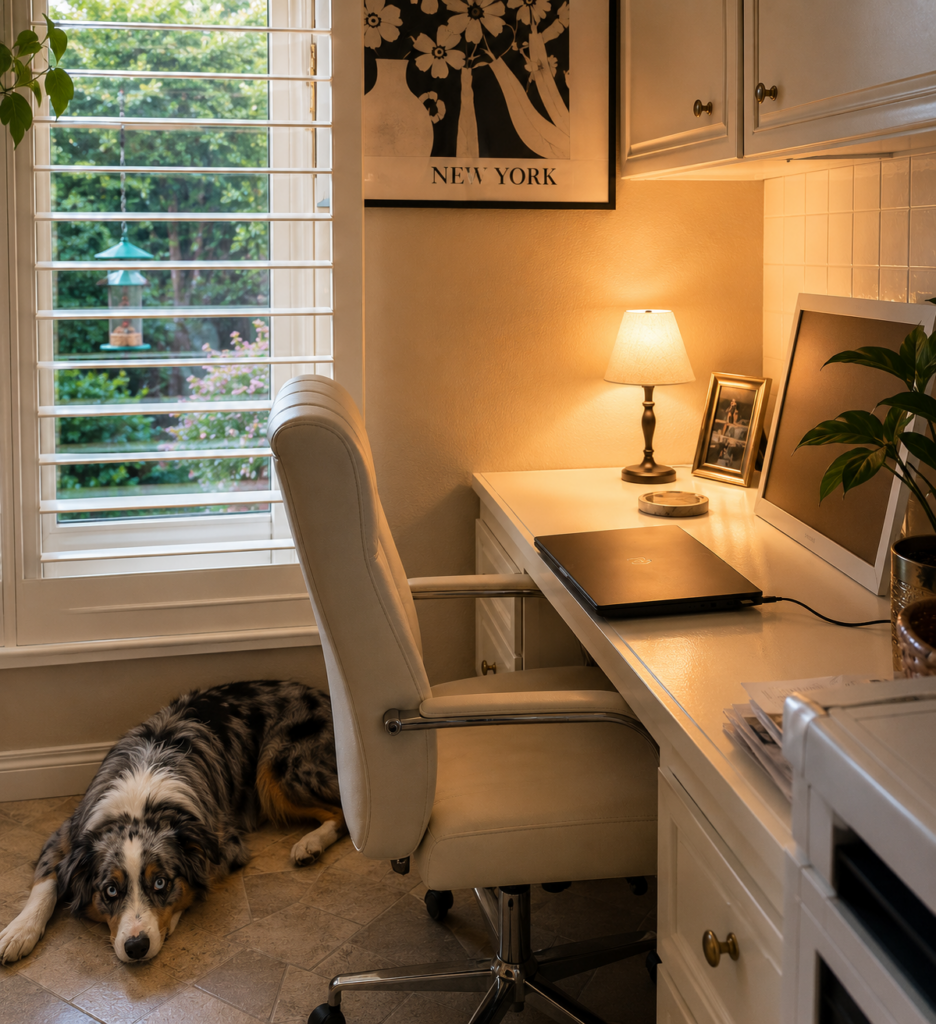
Create Spaces You Love Using Although there is a dedicated office elsewhere in the house, much of the writing for Things of Style happens from a small workspace in the kitchen. From this spot, I can watch birds at the feeders, enjoy the activity around the house, and stay connected to the pets throughout the day. More often than not, one of the dogs is curled up at my feet while I work, making the space feel far more inviting than a traditional office.
The Best Homes Feel Lived In A beautiful home should never feel untouchable. The spaces we remember most are filled with personality, comfort, and everyday life. Pets find their favorite spots, family gathers in the kitchen, and routines develop naturally over time. At Things of Style, we believe organization isn’t about creating a perfect home. It’s about building thoughtful systems that make daily life easier while leaving room for the people, pets, and memories that make a house feel like home.
Organization isn’t about creating a perfect home. It’s about building thoughtful systems that make daily life easier while leaving room for the people, pets, and memories that make a house feel like home.